 |
Cathar Castles
|
   |
 |
|
|
|
|
|
|||||||||||||||||||||||||||||||||||||||||||||||
|
|
|
|
|
|
 |
|||||||||||||||||||||||||||||||||||||||||||||||
|
|
Château de Beaucaire (
|
|
||||||||||||||||||||||||||||||||||||||||||||||||||
AddressContact James McDonald Tel from the US: 010 33 468 201142 Tel from the UK: 01 33 468 201142 Tel from France: 0468 201142 Tel other: + 33 468 201142 e-mail castlesandmanorhouses@gmail.com |
|
|||||||||||||||||||||||||||||||||||||||||||||||||||
Google Maps |
|
|||||||||||||||||||||||||||||||||||||||||||||||||||
|
|
|
||||||||||||||||||||||||||||||||||||||||||||||||||
Location
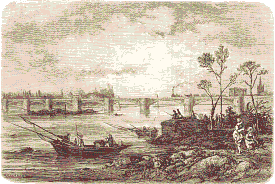
Beaucaire is located on the Rhône River in the department of Gard in the Languedoc-Roussillon, opposite the town of Tarascon, in Bouches-du-Rhône department of Provence.
|
|
|||||||||||||||||||||||||||||||||||||||||||||||||||
History
The Castle of Beaucaire was built over the site of the Roman Ugernum and was later the Merovingian capital of Pagus Argenteus - The Land of Silver. It overlooks the River Rhône, the traditional border with Provence, with Tarascon lying on the Provençal side. It was here, in an eleventh century castle, that King Richard I of England gave his sister Jeanne of England in marriage to Raymond VI of Toulouse; and it was here, a year later, in July 1197 that Jeanne gave birth to Raymondet, the future Count Raymond VII of Toulouse.
Raymond VI and Raymondet travelled separately from the Fourth Lateran Council to Genoa. There they met up and rode together to Marseilles where they were heartened by their welcome and the words of a loyal delegation from Avignon. Raymond VI now carried on for Aragon to talk to his allies there. Raymondet left for Beaucaire. It was on the way that Guy de Cavaillon spoke these famous words about paratge - the high civilisation of the Midi - to the young Raymondet:
Raymondet replied that any leopard that attacked him would find that he was fighting a lion, and so it was to prove.
|
|
|||||||||||||||||||||||||||||||||||||||||||||||||||

|
||||||||||||||||||||||||||||||||||||||||||||||||||||
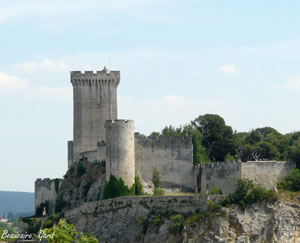
Château de Beaucaire - Architecture
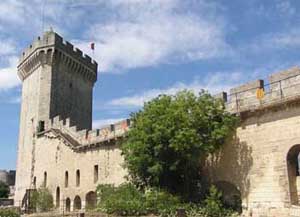
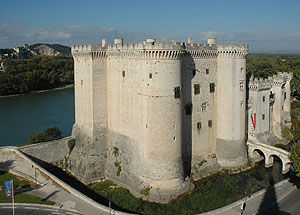
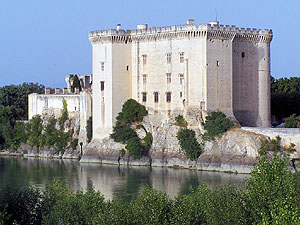
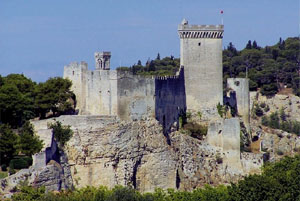
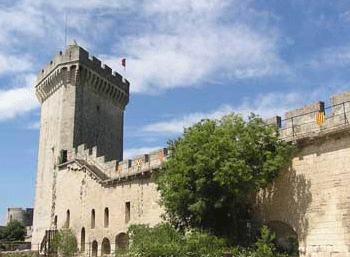
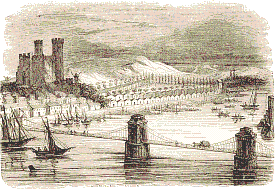
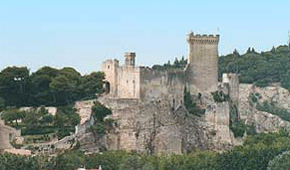
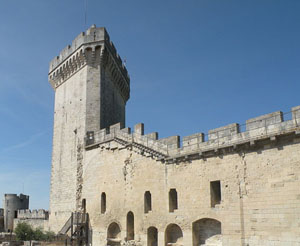
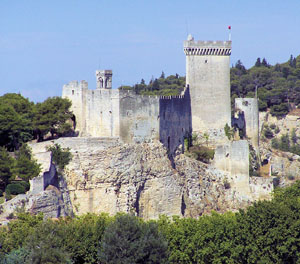
The Château de Beaucaire is a ruined castle in Beaucaire, sited by the Rhône River. The existing structures date from the 12th to 16th centuries. First built in the 11th century, the castle here was demolished and replaced by a new one by Saint-Louis after the annexion of the Languedoc to the e Royal domain in 1229. One of the largest in France the castle here was slighted on Richelieu's orders. It had been protected by a wall, the trace of which can still be followed. It includes a polygonal tower perched on a rocky spur, the façades dominating the sheer drop, and a round corner tower. inside the walls a staircase leads to a small Romanesque chapel with a sculpted tympanum, and then to the musée Auguste Jacquet. The museum has exhibits on the region's archaeology (dating back more than 40,000 years) and popular arts and traditions. The castle is owned by the commune and is open to the public. It has been listed since 1875 as a monument historique by the French Ministry of Culture. |
|
|||||||||||||||||||||||||||||||||||||||||||||||||||
|
|
The Barrois and the French were now confined, but safe enough from further attack. Raymondet had a palisade built to neutralise the French cavalry. Trapped in the castle, war horses - and knights - were useless. Raymond Gaucelm gave Raymondet some advice, to build a new wall with brattices and a barbican, with a catapult at each opening. As so often during this period, the dedication of the meridional forces was striking. Knights carried infill to build the walls, rare enough in itself, but so did their ladies. Noble girls carried timber and dressed stone. Then Raymondet built a battering ram to assault the castle.
Simon's catapult was a real threat, but his belfry and cat seem to have had little impact: "... these have no more effect than an enchanter's dream, they are a spider's web and a sheer waste of material. His catapult, though, throws strongly and is breaking down the whole gateway...". Simon de Montfort needed a quick victory. Ravens and vultures circled his men in the summer heat. Famously, the defenders in the citadel raised a black flag, the traditional flag of the Angel of Death, to signal to de Montfort that they could not hold out much longer. More Councils of war followed. Simon de Montfort's troops and Simon himself started to wonder how God could fail to support him, when the Catholic Church was so clearly behind him. They also started to think about Raymondet's high birth - they recalled that Richard Coeur de Lion was his uncle and Bertrand, Count of Toulouse, his ancestor. In medieval society this counted for much. Perhaps they were fighting on the wrong side. French crusaders started to desert, while fresh local reinforcements continued to join Raymondet. The people of Beaucaire worked to overcome the Crusaders in the citadel, using their battering ram.: "... long, straight, sharp and shod with iron; it thrust, carved and smashed till the wall was breached and many of the dressed stones thrown down. When the besieged Crusaders saw that, they did not panic but made a rope lasso and used a device to fling it so that they caught and held the ram's head, to the rage of all in Beaucaire. Then the engineer who had set up the battering ram arrived. He and his men slipped secretly into the rock itself [presumably the hole already made by the ram], intending to break through the wall with their sharp picks. But when the men in the keep realised this, they cast down fire, sulphur and tow together in a piece of cloth and let it down on a chain. When the fire caught and the sulphur ran, the flames and stench so stupefied them that not one of them could stay there. Then they used their stone throwers and broke down the beams and palisades." (The Song of the Crusade, laisse 164).
Again, questions were asked about why God was supporting the wrong side. The mood darkened and there was talk of having to eat the horses and then of having to eat each other. As Simon was conducting yet another Council of War a beggar burst in, shouting that he had seen a weasel. This was disturbing news. A weasel was a siege engine - similar to a cat, but smaller. The weasel was already against the citadel wall and ready to drive a spike into it. Once again the French engineers were up to the job. The chief engineer hurled a pot of molten pitch, hitting the weasel in exactly the right spot. It burst into flames.
One final battle was planned, this time with a surprise ambush, but once again the enterprise failed. After another scene of carnage, this time with hot lime being thrown down from the parapets, Simon addressed his barons: "My lords, God has shown me by the clearest evidence that I am out of my mind. Once I was rich, great and valiant, but now my affairs have turned to nothing, for now neither force, cunning nor courage can rescue my men or get them out of Beaucaire. Yet if I abandon the siege so shamefully, all over the world they will call me recreant." His men in the citadel were dying now, and there was nothing he could do about it.
As for Raymondet, he had earned his spurs. Now aged 19 he had already exceeded the military prowess of his sixty year old father. The flower of paratge was in full bloom. The writer of the Canso de la crozada, gave him a review at laisse 171 that any Medieval reader would have regarded as the very highest praise: "... Beaucaire remained in the hands of Raymond, Count, Marquis and Duke, for he was a valiant, wise and clever man, courteous, of excellent lineage and powerful kin, related to the noble House of France and to the good king of England." Despite his military prowess, Raymondet - the future Raymond VII, had no way to fight against the papal arsenal of other weapons. By diplomacy and the simple expedient of denying him a divorce, the pope ensured that Raymond's territories would pass by inheritance to the King of France. The fortress at Beaucaire was rebuilt after the annexation of Languedoc to France (1272) under the Treaty of Meax (1229). The new castle was attacked by the English (and Italians) in 1385 during the Hundred Years' War, and was damaged on several occasions during the Wars of Religion in the Seventeenth century.
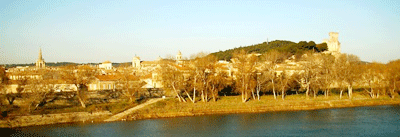
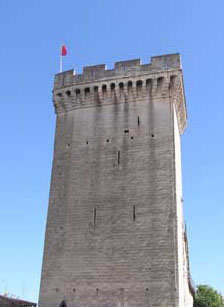
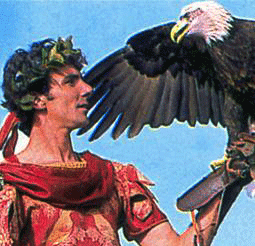
Napoleon famously dined at Beaucaire in 1793 - see below. You can visit the castle, now in the Gard département, which includes an unusual triangular keep. There is a view of the tiled rooftops of the town Beaucaire, the marshes of Camargue to the north, and Tarascon and the hills of Provence across the River Rhône. Les Aigles de Beaucaire (the eagles of Beaucaire) is a display of free flying eagles from the castle keep. It takes place year-round (except in December). Also there, you will find the Auguste-Jaquet Museum, containing 2000-year-old Gallo-Roman artefacts and Provençal costumes and household articles. |
|
||||||||||||||||||||||||||||||||||||||||||||||||||
|
|
|
|||||||||||||||||||||||||||||||||||||||||||||||||||
The Siege of Toulouse in 1217-18, according to The Chronicle of William of Puylaurens
|
|
|||||||||||||||||||||||||||||||||||||||||||||||||||
|
|
The Chronicle of William of PuylaurensWilliam of Puylaurens covered events relating to the history of Languedoc from the twelfth century to the mid 1270s. The main subject of his history is the Albigensian Crusade, which lasted from 1209 to 1229. Along with the Historia Albigensis by Pierre Des Vaux-de-Cernay and the Canso de la crozada by Guillaume de Tudèle [The Song of the Cathar Wars or the Chanson de la Croisade Albigesoise], this text is one of the three main contemporary narrative sources for the the papal wars against the people of the Languedoc known as the Cathar Crusade. While the other two accounts come to an end shortly after the death of Simon de Montfort in 1218, William provides details about the later years of the Crusade. William lived from about 1200 to about 1275, and served in the households of two bishops of Toulouse, as well as Raymond VII, Count of Toulouse. William gives a more even-handed account than either of the other two and, in the words of one historian, his work is "the product an intelligent and reasonable man." |
|
||||||||||||||||||||||||||||||||||||||||||||||||||
|
|
The Sieges of Beaucaire and ToulouseThe extract below begins with the future Raymond VII, Count of Toulouse, laying siege to the fortress of Beaucaire in 1216. Simon de Montfort hurried there to besiege the besiegers but failed. Heartened by the success of Raymond at Beaucaire other towns throughout the Midi revolted against the French invaders. Among them were the capital city, Toulouse. Simon, leader of the crusading forces, subsequently began a siege of Toulouse, which lasted from October 1217 to just after Simon's death during the siege in July 1218. This English translation is from The Chronicle of William of Puylaurens: The Albigensian Crusade and its Aftermath. The translation is by W.A. Sibly and M.D. Sibly (Boydell, 2003).
|
|
||||||||||||||||||||||||||||||||||||||||||||||||||
|
|
Chapter 26: The son of the Count of Toulouse lays siege to Beaucaire, and is in turn besieged by the Count of Montfort
|
|
||||||||||||||||||||||||||||||||||||||||||||||||||
|
|
|
Raymond VI, Count of Toulouse, and his son "Raymondet", the future Raymond VII, were on their way back from Rome where they had attended the Fourth Lateran Council called by Pope Innocent III. They were greeted with adulation by their subjects in Provence. Raymond VI went to Aragon, the eighteen year old Raymondet to Beaucaire. |
||||||||||||||||||||||||||||||||||||||||||||||||||
|
|
|
Click on the following link for a much more detailed account of the siege at Beaucaire |
||||||||||||||||||||||||||||||||||||||||||||||||||
|
|
For the citizens of Toulouse, whose hostages had already returned home, as I reported above, refused to submit to masters whose rule was overweening and took refuge in a form of disobedience. They bore with difficulty the yoke which undermined the liberty to which they were accustomed. |
The citizens of Toulouse enjoyed far greater liberty under the Counts of Toulouse than under Simon de Montfort and his French Crusaders. |
||||||||||||||||||||||||||||||||||||||||||||||||||
|
|
Accordingly Count Simon – fearful that if he took no steps to suppress them they would become as a swelling tumour, decided to oppose them with armed force and punish their arrogance severely. |
This was Simon de Montfort's normal mode of rule. He had on several occasions taken leading citizens hostage, sometimes using deceit to trick them into giving themselves into his power. |
||||||||||||||||||||||||||||||||||||||||||||||||||
|
|
Chapter 27: The Countof Montfort invades Toulouse, after setting fire to various parts of the city
|
|
||||||||||||||||||||||||||||||||||||||||||||||||||
|
|
So, in the year 1216, the Count entered the Cité with a large armed force. He started fires in several places hoping that the citizens would be put in dread by a double storm, of fire and sword, and thus be more readily thrown into confusion. The Toulousians met force with force, they placed wooden beams and wine casks in the streets and repulsed the attackers. All night long they had no rest from fighting fire or the enemy. |
William is describing ordinary citizens trying to fight armed knights, their troops and professional mercenaries. |
||||||||||||||||||||||||||||||||||||||||||||||||||
|
|
In the morning the venerable father Bishop Fulk took with him some of the citizens, and in the hope of adverting the impending dangers, mediated between the two parties to secure an agreed peace and sought to blunt the sharp edge of steel with silver. The Count's resources had been exhausted by the expenditure he had incurred at Beaucaire, and he had no money. Seizing on this some of his associates, claiming that it would be of his advantage, urged him to claim compensation of thirty thousand marks, from the Cité and the Bourg – an amount they could well afford – as a means of enabling them to gain the Count's favour. He willingly fell in with this counsel of Achitofel, and, blinded by money, did not see the dangers that might result. For those who gave this advice well knew that levying this sum would result in much wrong being done, to the community as a whole and to individuals; this would drive the Toulousains to aspire to their erstwhile freedoms and recall their former lord. When the levy came to be collected it was exacted with a harsh and cruel pressure; not only were pledges demanded, but the doorways of houses were marked with signs. There were many instances of this harsh treatment which it would take too long to describe in detail, as the people groaned under the yoke of servitude.
|
Bishop Fulk, "Folquet" of Marsielle, Bishop of Toulouse.
William is by no means a partisan of the Count of Toulouse. We get a fair picture of Simon de Montfort here. As William says above, even before this, the people of Toulouse "bore with difficulty the yoke which undermined the liberty to which they were accustomed." |
||||||||||||||||||||||||||||||||||||||||||||||||||
|
|
|
To this day the people of Toulouse have not lost affection for Raymond VI |
||||||||||||||||||||||||||||||||||||||||||||||||||
|
|
Chapter 28: The elder Count of Toulouse returns from Spain and regains control of the city |
|
||||||||||||||||||||||||||||||||||||||||||||||||||
|
|
|
Click on the following links for more on: The Château Narbonnais was The Count of Toulouse's castle & palace at Toulouse. Guy de Montfort (1166-1229), Lord of La Ferté-Alais, Béthencourt, Lombers & Castres , brother of Simon de Montfort. Neither Simon nor Guy was a count, but they were often called Counts by way of courtesy titles. |
||||||||||||||||||||||||||||||||||||||||||||||||||
|
|
In the meantime, whilst Count Simon, currently engaged in besieging Crest, was being apprised of these events, the citizens began to cut off access from the Chateau Narbonnais to the Cité, with pales and stakes, large wooden beams and ditches, starting at the rampart known as le Touzet and going as far as the rampart of St James. Count Simon now arrived with Cardinal Bertrand, who had been sent as legate by the Supreme Pontiff Honorius, attacked the city with a strong force, but the citizens defended themselves courageously and his efforts were in vain. Then siege-engines were erected on all sides of the city, and a bombardment of mill-stones and other heavy stones was begun. |
At this time the Château Narbonnais was outside the city walls. Cardinal Bertrand - the Pope's legate. "a bombardment of mill-stones" gives an idea of the size of the projectiles and the power of the stone-throwing siege engines |
||||||||||||||||||||||||||||||||||||||||||||||||||
|
|
Meanwhile the legate sent Lord Fulk, the Bishop of Toulouse, to France to preach the cross; with him were others entrusted with the same mission including Master Jacques de Vitry, a man of outstanding honour, learning and eloquence, who later became Bishop of Acre and then a cardinal of the Church of Rome. The lord Bishop of Toulouse once spoke to me of Master Jacques, who had told him that he had been enjoined in a dream by a vision of St. Saturnin, the first Bishop of Toulouse, to preach against his people; he referred the matter to the Bishop and asked him if there had at one time been a priest at Toulouse called Saturnin - he had not previously known this. |
Whenever the Crusaders were losing the Catholic bishops would initiate a new preaching campaign to attract more Crusaders from France. |
||||||||||||||||||||||||||||||||||||||||||||||||||
|
|
The preaching mission resulted in a great many men taking up the cross; these came to take part in the siege of Toulouse in the following spring, and the Bishop returned to the army with them. Count Simon now donated to the Bishop and his successors as bishops of Toulouse in perpetuity the castrum of Verfeil, with all the towns and forts which belonged to it and which contained twenty hearths or less; the count retained nothing, and imposed only one condition that if he were ever to become involved in warfare on open ground in the territory of Verfeil, the Bishop would provide him with one armed knight. |
It was at this time normal for a bishop to hold temporal lordships and provide "military service" under the feudal system - then taught to be divinely ordained. |
||||||||||||||||||||||||||||||||||||||||||||||||||
|
|
The labour of battle oppressed the besieged and the besiegers alike throughout the winter, as they fought with siege-engines and the other instruments of war. Count Simon, now strengthened by the presence of the newly arrived crusaders, harried his enemies, less by direct attacks on the walls of the town than by excursions around it (which the citizens hindered by erecting barriers and digging ditches). At last it was decided to construct a wooden engine of the type known as a 'cat', which would enable his men to bring up earth and wood to fill up the ditches; once the ditches had been levelled they would be able to engage the enemy at close quarters and effect an entry into town after breaking up the wooden barriers opposing them. |
Siege Warfare often involved the use of siege engines to breach defensive walls. One such engine was called a cat |
||||||||||||||||||||||||||||||||||||||||||||||||||
|
|
However the Count [Simon] was worn out by his labours, despondent and weakened and exhausted by the drain on his resources; nor did he easily bear the prick of constant accusations be the legate that he was unthinking and remiss. Whence, it is said, he began to pray to God to give him peace by the remedy of death. One day, the day after the feast of St John the Baptist, he went into the cat, and a stone thrown from an enemy mangonel fell on his head; he died at once. The news reached the citizens inside Toulouse that day, and they did not hold back from showing their delight by shouts of rejoicing, whilst on the other side there was great sadness. Indeed the citizens were in great distress through fear of an imminent attack; moreover they had few remaining supplies and little hope of gathering their harvest that summer. |
A mangonel was a stone-throwing siege engine.
A plaque marks the spot where Simon de Montfort fell |
||||||||||||||||||||||||||||||||||||||||||||||||||
|
|
So, the man who inspired terror from the Mediterranean to the British sea fell by a blow from a single stone; at his fall those who had previously stood firm fell down. In him who was a good man, the insolence of his subordinates was thrown down. I affirm that later I heard the Count of Toulouse (the last of his line) generously praise him - even though he was his enemy - for his fidelity, his foresight, his energy and all the qualities which befit a leader. |
This Count of Toulouse must be Raymond VII rather than Raymond VI. Is is plausible that Raymond would have paid tribute to an exceptionally brave and able leader like Simon de Montfort while remaining silent about the equally exceptional shortcomings of this "man who inspired terror from the Mediterranean to the British sea" |
||||||||||||||||||||||||||||||||||||||||||||||||||
|
|
||||||||||||||||||||||||||||||||||||||||||||||||||||
|
|
Napoleon Bonaparte and his Supper at Beaucaire in 1793
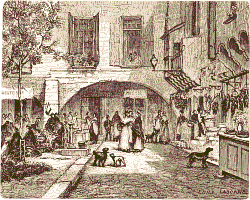
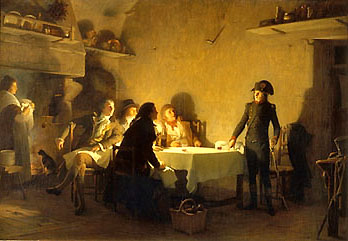
As a young artillery captain Napoleon was sent in 1793 to convey gunpowder to the Italian army. In the Midi he was caught up in a Federalist insurrection. Troops of the Marseilles National Guard had taken the city of Avignon, an important ammunition depot, and had allegedly massacred thirty civilians. On July 24, Napoleon took part in General Jean Carteaux's successful attempt to retake this city. There Napoleon witnessed the horrors of civil war. His own troops shot and killed national guardsmen and civilians. A few days later, the 28th July 1793, he was staying at the house of M. Renaudet, a pharmacist at Beaucaire. That evening he dined at an auberge with four merchants visiting the fair at Beaucaire. During the course of dinner he defended the principles of the Revolution to his companions. After this dinner (supposedly the next day) he wrote a text in the form of a dinner-table discussion imitating a Socratic dialogue, called Le Souper de Beaucaire, (The Supper at Beaucaire) in which he professed his Republican beliefs and attempted to convince his readers of the necessity of the Revolution and the horrors of civil war such as he had recently witnessed at Avignon.
He addressed his pamphlet to the representatives of the National Convention, who agreed to pay for it to be published. The dialogue is between Napoleon, who played the part of a soldier representing the Jacobin point of view, two merchants from Marseilles who took up the cause of the Marseilles National Guard, and two civilians from the region, a man from Nimes and a manufacturer from Montpellier. Perhaps not surprisingly, the dialogue is not evenly balanced, the soldiers part being given better arguments, crisper delivery and most of the talking. The last two civilians acted as "impartial" contributors to the discussion by directing the conversation and encouraging the Marseilles men to reach Republican conclusions. Napoleon's pamphlet in turn inspired a painting, also called Le Souper de Beaucaire, (The Supper at Beaucaire), shown here on the right. Napoleon is the artillery captain (capitaine d'artillerie) facing the others The text of Le Souper de Beaucaire or the Supper at Beaucaire, can be found in:
|
|
||||||||||||||||||||||||||||||||||||||||||||||||||
|
|
|
|
||||||||||||||||||||||||||||||||||||||||||||||||||
|
|
|
|
||||||||||||||||||||||||||||||||||||||||||||||||||

















|
|
|
|
|
|
||||
|
|||||||||


| :::: Link to us :::: Castle and Manor Houses Resources ::: © C&MH 2010-2016 ::: contact@castlesandmanorhouses.com ::: Advertising ::: |