|
|
Château de Puilaurens ( Castèl de Puèglaurenç)
The Château de Puilaurens (Occitan: lo Castèl de Puèg-Laurenç)
is one of the Cathar Castles of the Languedoc in what is now the
South of France. It is located in the commune of Lapradelle-Puilaurens
in the Aude département.
The castle here had belonged to the Abbey of Saint-Michel de Cuxa
before it was acquired by the King of Aragon in 1162. As Aragonese
property it was outside the territory ravaged by the Crusaders during
the Cathar wars. Like Queribus
it therefore provided a refuge for those fleeing from the invading
forces. Those who took refuge there included both Cathars
and faidits, that is to say those who had forfeited their
property because of their opposition to the invaders. These
faidits included high nobles, such as Guillaume de Peyrepertuse.
See separate sections below on:
Address / Maps
/ Location
History
Architecture
Photographs
|
|
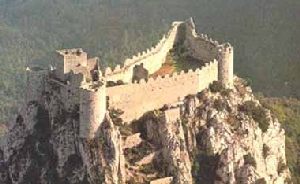
The Château of Puilaurens
|
 |
| |
|
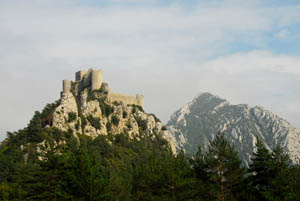
The Château of Puilaurens
|
 |
|
|
| |
|
|
History
Somehow, it is not known how, Puilaurens was ceded to the French
some time before 1255. After 1258 its possession by the French
crown was ratified by the Treaty of Corbeil, when the Aragonese
border was moved south. In 1260 it was garrisoned by 25 sergeants.
This is one of the "Five Sons of Carcassonne",
along with Queribus,
Termes,
Aguilar,
and Peyrepertuse:
five castles strategically placed to defend the French border against
the Spanish.
It was taken by Spanish troops in 1635, but lost all strategic importance
after the Treaty
of the Pyrenees in 1659 when the border was moved even further
south to its present position along the crest of the Pyrenees.
The present building mainly post-dated the Treaty of Corbeil, and
is thus principally French. Some points of interest include
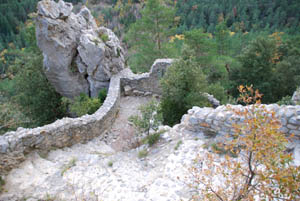
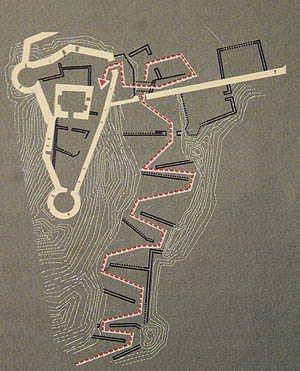
the heavily defended steep zigzagging approach path, remnants of
a barbican, meutriers (murder holes), and a spectacular donjon (keep).
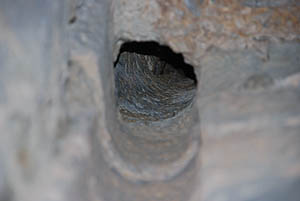
Most impressive of all in the south-west tower (the White Lady's
Tower) is a speaking-tube, built into the stonework and allowing
people to communicate from one floor to another - exactly the same
principle later adopted in ships to allow voice communication between
decks.
In the 13th century it had belonged to the Lords of Fenouillet.
Defended by Pierre Catala and, more importantly, by Guillaume de
Peyrepertuse,
it withstood attack by Simon de Montfort and his successors until
the end of the crusades. After 1243, its owner was Roger Catala,
Pierre's son, but it was defended, like Quéribus, by Chabert
de Barbaira, a Cathar military commander who was the last commander
to defend the Occitan cause.
Numerous Cathar deacons sought refuge here after the fall of the
Château
of Montségur ( Montsegùr).
It is thought that the castle was finally forced to surrender (probably
around the same time as Queribus)
c.1255.
Montsegùr).
It is thought that the castle was finally forced to surrender (probably
around the same time as Queribus)
c.1255.
  The
castle is open to the public, it stands on a spur of rock above
the Boulzare Valley and the village of Lapradelle. After a short
walk, you cross the barbican protecting the entrance and find yourself
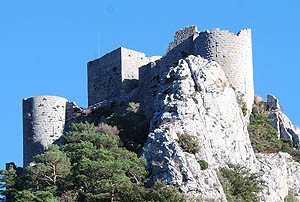
in a courtyard surrounded by tall walls flanked by two round towers.
To the left of the courtyard is a second line of fortifications
defending the keep. Two towers strengthen this wall, including the
«White Lady » tower named after the lady who haunts
the ruins (Blanche of Bourbon, Philip the Fair's grand-daughter
who stayed in Puilaurens and was murdered by her husband, Peter
the Cruel, King of Castile). The massive square keep crushes by
its sheer weight a castle that is one of the best preserved reminders
of the Cathar period in the area. The
castle is open to the public, it stands on a spur of rock above
the Boulzare Valley and the village of Lapradelle. After a short
walk, you cross the barbican protecting the entrance and find yourself
in a courtyard surrounded by tall walls flanked by two round towers.
To the left of the courtyard is a second line of fortifications
defending the keep. Two towers strengthen this wall, including the
«White Lady » tower named after the lady who haunts
the ruins (Blanche of Bourbon, Philip the Fair's grand-daughter
who stayed in Puilaurens and was murdered by her husband, Peter
the Cruel, King of Castile). The massive square keep crushes by
its sheer weight a castle that is one of the best preserved reminders
of the Cathar period in the area.
|
|
|
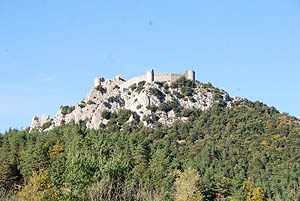
Approaching the Castle of Puilaurens
|
 |
| |
|
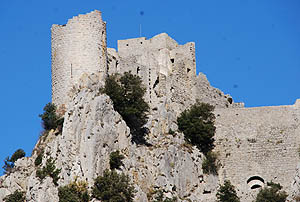
Castle of Puilaurens - Keep (Donjon). Note
the main gate just visible on the bottom right
|
 |
| |
|
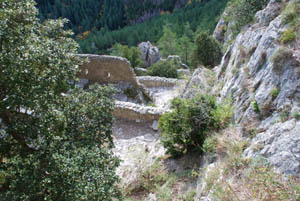
The track up to the Castle of Puilaurens
(which is also a nature trail)
|
 |
| |
|
Looking down on the chicane
|
 |
| |
|
The main Gate at the Castle of Puilaurens
(from inside)
|
 |
| |
|
Arrow loops at the Castle of Puilaurens
(defending the the Courette)
|
 |
| |
|
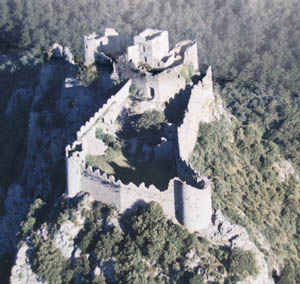
The Château of Puilaurens. Aerial view
of the Castle of Puilaurens from the West (ward in the front,
Keep at the back)
|
 |
| |
|
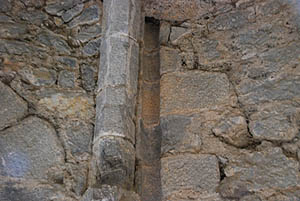
The Château of Puilaurens
A rare feature in the White Lady's Tower
(Dame Blanche tower) in the keep of the Castle of Puilaurens.
Next the vault is a tube cut into the stone leading from one
level to the next through the vaulted roof. This is a speaking
tube - similar to ones found on modern ships.
|
 |
| |
|
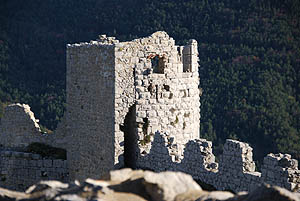
The Château of Puilaurens. A square
Tower in the walls around the ward of the Castle of Puilaurens
|
 |
| |
|
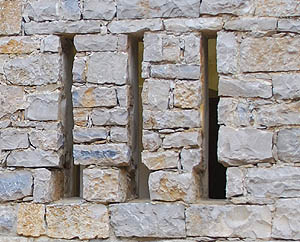
The Château of Puilaurens. A modern
WC block - with vents modelled on medieval arrow slits.
|
 |
| |
|
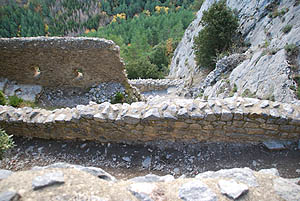
The Château of Puilaurens. Looking
down the chicane at the Castle of Puilaurens
|
 |
| |
|
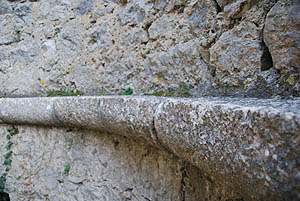
The Château of Puilaurens. Supporting
ledge for a floor in a circular tower at the Castle of Puilaurens
|
 |
| |
|
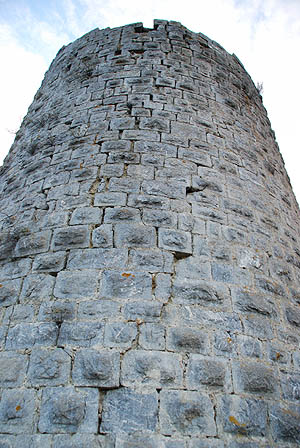
The Château of Puilaurens. Round tower
at the Castle of Puilaurens - Note the bossed stone
|
 |
| |
|
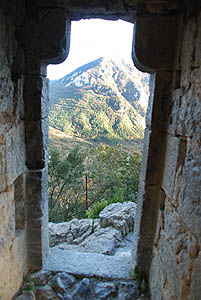
The Château of Puilaurens.
Medieval window at the Castle of Puilaurens
|
 |
| |
|
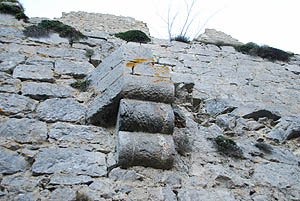
The Château of Puilaurens. Remnant
of a sophisticated supporting structure at the Castle of Puilaurens
|
 |
| |
|
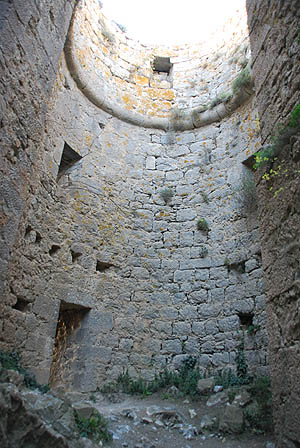
The Château of Puilaurens. View of
the interior of a round tower at the Castle of Puilaurens
|
 |
| |
|
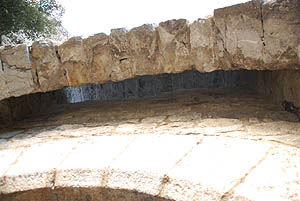
The Château of Puilaurens
Murder Hole in front of an entry gate
|
 |
| |
|
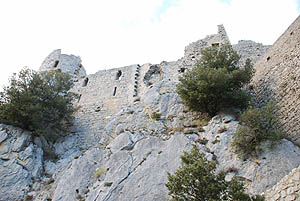
Natural defences
|
 |
| |
|
The Château of Puilaurens
Part way up the defensive chicane
|
|
| |
|
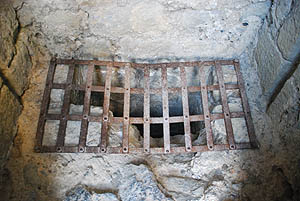
The Château of Puilaurens
Latrine (with modern safety grill)
|
 |
| |
|
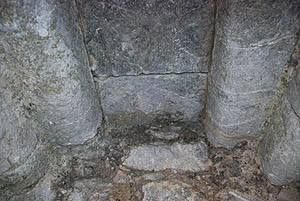
The Château of Puilaurens
Roofing - a primitive method suitable for
small spans
|
 |
| |
|
The Modern Arms of Puilaurens
|
 |
|
|
Approaching the Castle of Puilaurens
|
 |
| |
|
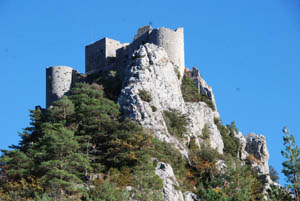
Castle of Puilaurens - Keep (Donjon)
|
 |
| |
|
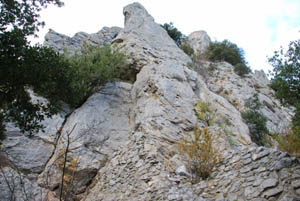
This is the natural defense - before you
get anywhere near the Castle of Puilaurens
|
 |
| |
|
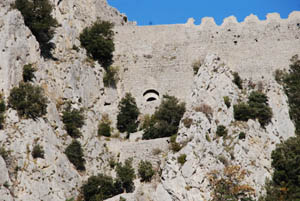
Looking up at the chicane
(to the door in the centre of the photo)
|
 |
| |
|
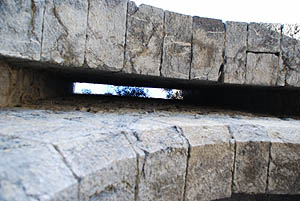
The main Gate at the Castle of Puilaurens
(looking up at the murder hole)
|
 |
| |
|
Arrow loops at the Castle of Puilaurens -
this is the exterior of the Courette within the ward
|
 |
| |
|
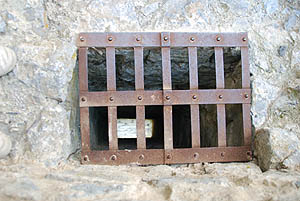
The Château of Puilaurens.
Latrines from above (with a modern Health
& safety grill)
|
 |
| |
|
The Château of Puilaurens
Vaulted ceiling in the White Lady's Tower
(Dame Blanche tower) in the keep of the Castle of Puilaurens
|
 |
| |
|
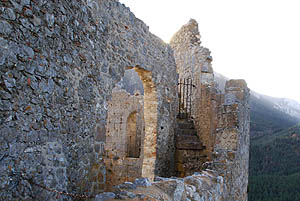
The Château of Puilaurens.
Staircase leading up to a now vanished upper
storey in the keep of the Castle of Puilaurens
|
 |
| |
|
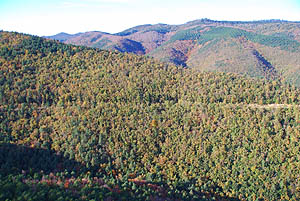
The Château of Puilaurens
View from Castle of Puilaurens (November
2010)
|
 |
| |
|
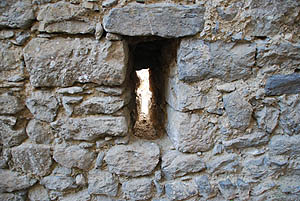
A twelfth century arrow slit in the Castle
of Puilaurens
|
 |
| |
|
The Château of Puilaurens. Looking
up at the Castle of Puilaurens
|
|
| |
|
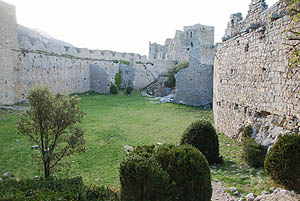
The Château of Puilaurens
Ward at the Castle of Puilaurens
|
 |
| |
|
The Château of Puilaurens
View of the Pyrenees from the Castle of Puilaurens
|
 |
| |
|
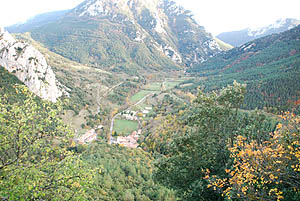
The Château of Puilaurens
View from the Castle of Puilaurens
|
 |
| |
|
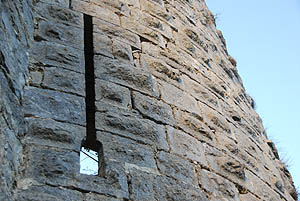
The Château of Puilaurens. Arrow slit
at the Castle of Puilaurens
|
 |
| |
|
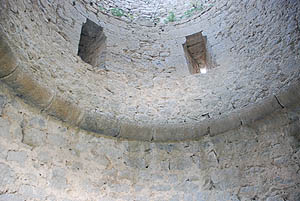
; The Château of Puilaurens interior
of a round tower at the Castle of Puilaurens (the ledge once
supported a floor)
|
 |
| |
|
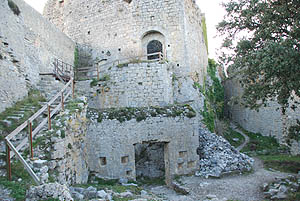
The Château of Puilaurens. View of
the courette from the ward of the Castle of Puilaurens
|
 |
| |
|
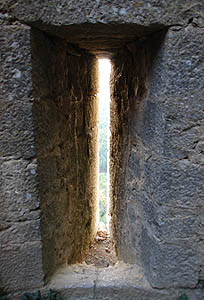
The Château of Puilaurens
Arrow slit at the Castle of Puilaurens
|
 |
| |
|
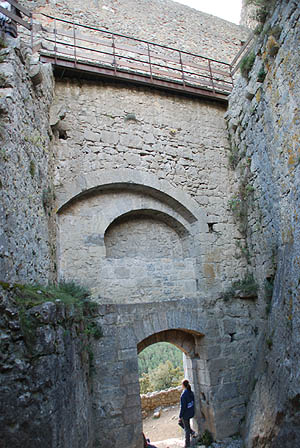
The Château of Puilaurens. The arches
here represent the top of a murder hole defending the entrance
|
 |
| |
|
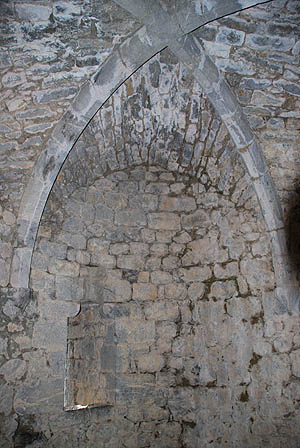
The Château of Puilaurens
Vaulted ceiling
|
 |
| |
|
The Château of Puilaurens
Another murder hole, viewed from underneath
|
|
| |
| |
|
|
Castle of Puilaurens - Keep (Donjon)
|
 |
| |
|
Castle of Puilaurens - Keep (Donjon)
|
 |
| |
|
Castle of Puilaurens entrance chicane. The
track becomes steeper and so easy to defend
|
 |
| |
|
The main Gate at the Castle of Puilaurens
(from outside)
|
 |
| |
|
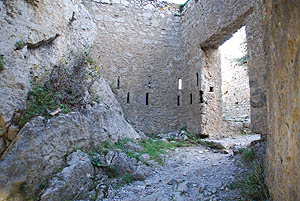
Once inside the main Gate at the Castle of
Puilaurens
attackers are trapped in a killing area (the Courette) - note
the arrow slots in the walls. The area would also be defended
from above.
|
 |
| |
|
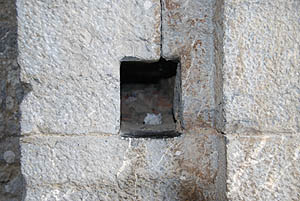
Medieval gateways often have very deep horizontal
holes built into the walls. Great wooden bars fitted into
the wall and could be extracted quickly to bar the door (fitting
into a much shallower hole on the other side of the doorway..
|
 |
| |
|
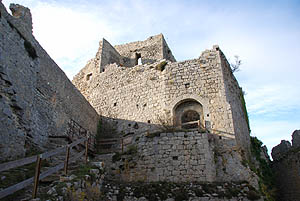
Once inside the ward attackers still needed
to get into the Donjon complex. The way in was up a flight
of exposed stairs (left), across a wooden bridge (which would
of course be removed) and through another heavily defended
gate.
|
 |
| |
|
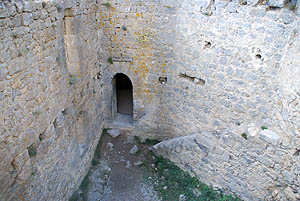
The Château of Puilaurens
Entrance to the White Lady's Tower (Dame
Blanche tower)
|
 |
| |
|
A rare feature in the White Lady's Tower
(Dame Blanche tower) in the keep of the Castle of Puilaurens.
Next the vault is a tube cut into the stone leading from one
level to the next through the vaulted roof. This is a close
up of the speaking tube.
|
 |
| |
|
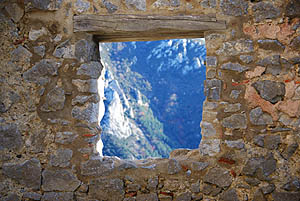
The Château of Puilaurens
Windows like this one in the Castle of Puilaurens
are modern
|
 |
| |
|
The Château of Puilaurens
Assomoire (Murder Hole) at the Castle of
Puilaurens
|
|
| |
|
The Château of Puilaurens
Courette at the Castle of Puilaurens
|
|
| |
|
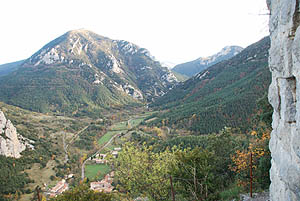
The Château of Puilaurens
View from the Castle of Puilaurens
|
 |
| |
|
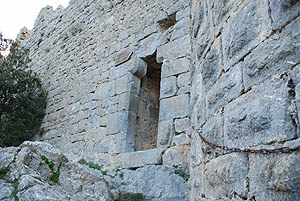
The Château of Puilaurens
Postern Gate at the Castle of Puilaurens
- seen from outside
|
 |
| |
|
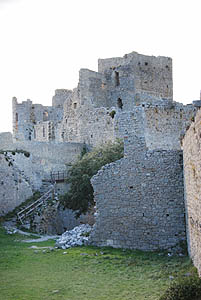
The Château of Puilaurens. View of
the keep from the ward of the Castle of Puilaurens
|
 |
| |
|
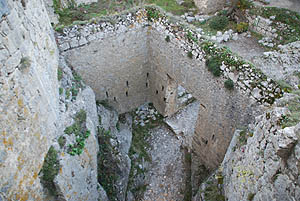
The Château of Puilaurens. View of
the courette of the Castle of Puilaurens (from above)
|
 |
| |
|
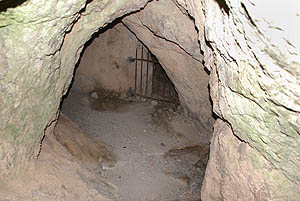
The Château of Puilaurens
Souterrain under the keep of the Castle of
Puilaurens
|
 |
| |
|
The Château of Puilaurens
Arrow slit at the Castle of Puilaurens
|
 |
| |
|
The Château of Puilaurens
The Basse Court
|
|
| |
|
The Château of Puilaurens
Plan view showing the defensive chicane
|
 |
| |
|
The Château of Puilaurens
External staircase
|
|
| |
|
The Château of Puilaurens at Sunset
|
 |
| |
|





