 |
Cathar Castles
|
   |
 |
|
|
|
|
|
||||||
|
|
|
|
|
|
 |
||||||
|
|
Castle of Usson (
|
|
|||||||||
AddressContact James McDonald Tel from the US: 010 33 468 201142 Tel from the UK: 01 33 468 201142 Tel from France: 0468 201142 Tel other: + 33 468 201142 e-mail castlesandmanorhouses@gmail.com |
|
||||||||||
Google Maps |
|
||||||||||
|
|
|
|||||||||
Location
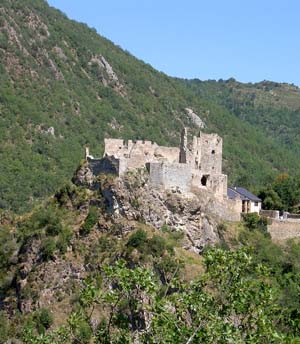
Not far away is the Château of Donezan, where Cathars were still holding out eleven years after the fall of the Château of Montségur. Usson lies in the Ariège south of the département of the Aude on the river of the same name. It is situated at 920 meters in height and dominates the valley of the Aude. Puilaurens is 30 kms way, Puivert 49 kms and Quéribus 60 kms. Information: Château d'Usson: 04 68 20 43 92;
Office du tourisme: 04 68 20 41 37
|
|
||||||||||

|
|||||||||||
History
Like other seigniorial residences it was sold as communal property at the French Revolution, after which time it was used as a stone quarry. |
|
||||||||||
|
|
|
||||||||||
|
|
|||||||||||
|
|
|
|
|||||||||
|
|
|
|
|||||||||







|
|
|
|
|
|
||||
|
|||||||||


| :::: Link to us :::: Castle and Manor Houses Resources ::: © C&MH 2010-2016 ::: contact@castlesandmanorhouses.com ::: Advertising ::: |