 |
Cathar Castles
|
   |
 |
|
|
|
|
|
||||||||||||||||||||||||||||||||||||||||||||||||||||||||||
|
|
|
|
|
|
 |
||||||||||||||||||||||||||||||||||||||||||||||||||||||||||
|
|
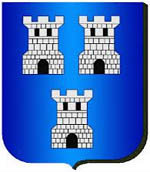
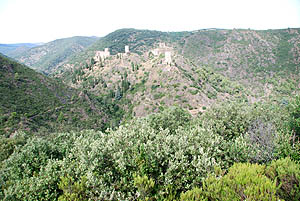
An unusual arrangement of three castle towers (Las Tours, The Towers) this fortification belonged to the Lords of Cabaret, who held in fief from the Trencavels. In the thirteenth century there were three towers here, built on the same rocky outcrop. They are called Cabaret (to the north), Quertinheux and Surdespine (to the south). These are some of the few original Cathar castles left. The Seigneurs of Cabaret received troubadours here, including Raymond de Miraval and Peire Vidal, who dedicated verses to the Cathar Ladies of the place. During the Cathar Crusade this was one of the most ardent centres of resistance to the French Crusaders, See sepate sections below on: |
|
|||||||||||||||||||||||||||||||||||||||||||||||||||||||||||||
AddressContact James McDonald Tel from the US: 010 33 468 201142 Tel from the UK: 01 33 468 201142 Tel from France: 0468 201142 Tel other: + 33 468 201142 e-mail castlesandmanorhouses@gmail.com |
|
||||||||||||||||||||||||||||||||||||||||||||||||||||||||||||||
Google Maps |
|
||||||||||||||||||||||||||||||||||||||||||||||||||||||||||||||
|
|
|
|||||||||||||||||||||||||||||||||||||||||||||||||||||||||||||
Location
Lastours is also the name of a nearby modern village and commune in the Aude department in southern France. Lastours lies in the Aude departément just north of Carcassonne. The four castles stand on a rocky spur above the modern village of Lastours, isolated by the deep valleys of the Orbeil river to the east.and Grésilhou river to the west. They were built at an altitude of 300 m along a rock wall just 1500 feet (450 m) long by 165 feet (50 m) wide. Cabaret, Surdespine and la Tour Régine stand in line, while Quertinheux is built on a separate pinnacle close by. Cabaret gives its name to the surrounding area - the Cabardès. Lastours is located 18 km (10 miles) north of Carcassonne, in the valley of the River Orbeil. The castles were built to control the access to Montagne Noire and the Cabardès region. The fortification here belonged to the Lords of Cabaret, who held in fief from the Trencavels. |
|
||||||||||||||||||||||||||||||||||||||||||||||||||||||||||||||

|
|||||||||||||||||||||||||||||||||||||||||||||||||||||||||||||||
History - The Pre-Cathar Period
The most ancient remains date to the Middle-Bronze Age at around 1500 years BC. The tomb of a young girl known as "the princess with the necklace" was found in a cave (which you pass through on the path up to the castles). Her body was covered with objects such as amber pearls and jewellery reminiscent of Mycenaean or Egyptian art. There is little information from the medieval period. Gregory of Tours mentions "Capur Arietis" (Ram's Head) which has the same meaning as "Cabaret". In 585 it seems that the son of the King of the Wisigoths took the castra of "Caput Arietis" from the King of Burgundy. There seems to have been iron mines here since ancient times. In 1119 Huges de Cabaret made a donation of his mines ("ferrières') of Carrus to the Church of St-Stephen de Cabardès. In 1153 we find a mention of a Sunday market at Cabaret, and it around this time that Surdespine was built. In the thirteenth century there were three towers here, built on the same rocky outcrop. They are called Cabaret (to the north), Quertinheux and Surdespine (to the south). These are some of the few original Cathar castles left.
|
|
||||||||||||||||||||||||||||||||||||||||||||||||||||||||||||||
History - The Cathar Period
His castles and village sheltered Cathar 'Perfects' during the Cathar wars (Albigensian Crusade) and Cathar bishops are known to have stayed in Cabaret, including Arnaud Hot, Pierre Isarn and Guiraud Abith.
Bouchard was holding Saissac, which had been given to him by simon.
It was at Cabaret that a line of a hundred men appeared on foot, having snaked their way from Bram, their eyes torn out, their noses cropped and their lips cut off by the Holy Catholic soldiers of Christ carrying out what they described as "God's Business". They were sent to Lastours to horrify and terrify the people there. In March 1211, a few months after the fall of Termes, a new crusader army arrived at Carcassonne. Peter-Roger de Cabaret feared that he could not withstand a siege like that of Termes. Taking a massive risk he released his prisoner Bouchard de Marly, gave him fine clothes, a fine palfrey and his castle at Cabaret. Simon's banner now flew over another Cathar stronghold. (The Song of the Cathar Wars laisse 62-65) By 1223 the position had changed significantly and Simon de Montfort and his crusaders were more hated than ever. Pierre-Roger recovered his property. Once again Cabaret became the foremost centre of resistance against the French invaders. The Lords of Lastours lead resistance to the Crusaders between 1220 to 1229, a period therefore known as the Guerre de Cabaret. The Cathar bishop of Carcassonne, Pierre Isarn, was given refuge here until 1226 and it became the seat of his bishopric..
The population was moved to a new settlement called Riviere, on the site of the terraces between the Old Church and the river. In 1238 orders were given for Lastours to be transformed into a royal fortress. The Seigneurs of Cabaret regained it, briefly, when they accompanied their liege Lord, Trencavel, in his attempted re-conquest in 1240. Riviere was abandoned in turn in 1836, when the populace was moved to present location of the village of Lastours.
1211. Release of Bouchard de Marley & Surrender of Cabaret. Laisse 63-66 [Laisse 63] A l'intrar de caresma, cant baicha la freidor
[Laisse 63] Lo coms P. d'Ausurra, Rotberts de Cortenai,
[Laisse 64] Senhors, tôt en aisi com denant vos ai dit
[Laisse 65] Cant lo coms de Montfort e l'autra baronia
[Laisse 66] Tota aisela noit tro en la matineia
1211. Release of Bouchard de Marley & Surrender of Cabaret. Laisse 63-66 Laisse 63 Count Peter of Auxerre, Robert of Courtenay and the precentor of Paris, as the book says, brought a very strong force from the Paris region and entered Carcassonne. Hear what a miracle Jesus did there, as the book tells you - The men in Cabaret were very alarmed at the arrival of this contingent, and one morning very early Peter Roger, lord of Cabaret, went to see his prisoner Sir Bouchard in the room where he lay in irons. 'Bouchard,' he said, 'I know you have a noble heart, you are a true and valiant man and would never do anything that should not be done. I don't know whether I shall meet with thanks and compassion if l set you free, but I am going to take the risk.' 'I have never done or commanded anything dishonourable' 'Well then,' said Peter Roger, 'you are no longer a prisoner, and here and now I make over to you my castle and myself.' He sent for a smith and had Bouchard released from his irons, had him given a comfortable bath and his hair cut, and besides this he gave him very handsome clothes and a bay palfrey, for he was not joking but in good earnest. You can imagine Bouchard's delight. Never had he known such happiness since the day his mother gave him birth. Laisse 64 My lords, just as I have been telling you, the lord of Cabaret omitted nothing: he summoned a smith and had Sir Bouchard freed from his irons and nobly clad in rich robes; he gave him a pacing palfrey to ride, the handsomest ever seen; and when he was properly dressed he gave him three young noblemen on horseback for an escort and himself rode with him out of the castle. Before they went, he invested him with the castle and with himself and did him unconditional homage. Sir Bouchard promised him on oath that he for his part would never betray Peter Roger's trust, and that when his case was finally settled no one should think him a fool or laugh at him for releasing Sir Bouchard. Nor did Bouchard break his word, for he kept his promise faithfully. Laisse 65 You need not ask whether the count de Montfort and his lords were glad when they heard that Bouchard was free and would soon be with them. They all went at once to welcome him. When they had met and kissed, they begged him to say whether or not he had given hostages, and he said no, indeed he had not. 'On the contrary, I am absolutely free and we have command of the castle. Listen, and I'll tell you how it happened: my lord Peter Roger has given me the lordship of his whole castle which he was holding against us, and has established friendship and a close alliance with me. And I, God grant me his blessing! have promised him that he shall be the better for this all his life long, and I will give him twice as much as he now possesses.' 'In that case,' said the Count de Montfort, 'it would be very wrong if our company were not to be good to him. Not one you must hold him at arm's length.' 'Ah God'; said they all, 'blessed Mary! What a noble deed he has done, what an act of courtesy! There's not a man in France, I'm sure there never will be, who could have done this.' Laisse 66 Sir Bouchard celebrated his release all that night till dawn, and at ñrst light the majority of the force entered Cabaret. There the terms of the agreement were-announced and discusssed. Bouchard spoke fist, in the hearing of them all, and the agreement was fully accepted by all parties on both sides. Count Simon's banner was raised on top of the tower. That is how Cabaret was taken, and how our crusaders manned its castle. See what a miracle it was, for if all the people ever born in the world surrounded that fortress, the defenders would think them worth less than a peeled apple, it is so strong. But against the host of Christ no castle, no Citadel can stand, however strong its battlements. Only a fool opposes the crusaders, a fool who may rejoice at first but in the end must be defeated.
|
|
||||||||||||||||||||||||||||||||||||||||||||||||||||||||||||||
History - The Post Cathar Period
After their rendition, the villages and the castles were plundered. The French king decided on the destruction of the three towers and their houses in order to eliminate any prospect of a refuge for surviving Cathars. The castles were rebuilt on the crest where they were less accessible to enemy fire. The Tour Régine (the "new" fourth tower) was built by order of the French king to assert his supremacy. Lastours became the administrative and military centre of six communities forming the châtellerie of Cabardès.
In the 16th century, the castles were occupied by Protestants during the Wars of Religion. They were dislodged by maréchal de Joyeuse in 1591. At the French Revolution, the castles of Lastours were definitively abandoned. Today, you will find four towers at Lastours. Traces of the original villages can be found on the west flank of the hill arranged in a semicircle following the contours around an older chateau, the foundations of which are still visible. The site has been classified as a monument historique by the French Ministry of Culture since 1905 and archaeological digs are still in progress.
|
|
||||||||||||||||||||||||||||||||||||||||||||||||||||||||||||||
Architecture
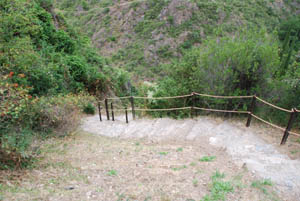
Lastours controlled the principal access routes into the Cabardès and the Montagne Noire regions. The main route linking Carcassonne to Albi up until 1830 can still be seen, though badly degraded. Archaeological digs have been carried out here since the 1961 when "the princess with the necklace" was discovered along with material from the eastern Mediterranean. Amphorae have also been discovered here. There was also an extensive site at Le Jocas, about 1 km away. |
|
||||||||||||||||||||||||||||||||||||||||||||||||||||||||||||||
Cabaret
|
a Entry / Entrée |
||||||||||||||||||||||||||||||||||||||||||||||||||||||||||||||
Quertinheux
It consists of a circular tower and a polygonal curtain wall. A chicane defends the entrance. There are two water cisterns - one for rainwater from the roof, and one for rainwater from the chemin de ronde. It overlooks the remains of a Romanesque church.
|
|
||||||||||||||||||||||||||||||||||||||||||||||||||||||||||||||
Surdespine
It was first mentioned in 1145. On the highest part of the site, it consists of a square tower, a rectangular lodging and a cistern. A trapezoidal curtain wall (courtine) gives protection. Surdespine is noted for the rarity of its murder holes and its four semi-circular arched windows. Its cistern holds 26 cubic meters and is still crepied.
|
|
||||||||||||||||||||||||||||||||||||||||||||||||||||||||||||||
Tour Régine
It is thought that this tower was built after the Albigensian Crusade: There is no mention of this structure before 1260, and afterwards it was for a while called the "New Tower". The name Régine also suggests a French Royal connection (Blanche de Castile?) as do architectural features similar to contemporary work at Carcassonne Some features to note
|
|
||||||||||||||||||||||||||||||||||||||||||||||||||||||||||||||
Village and Other.
Church. On the way up you pass the remains of a medieval church thought to be the Church of Saint Peter and Saint Paul. It dates from the 11th century and was altered in the 13th century. Medival Village. Today you can also visit the vestiges of the original village of Lastours on 8 terraces - archaeologists have uncovered the substantial walls of many medieval houses, along with graves dating from the VI Century. The walls, often over 1 metre wide, are constructed of dressed limestone and schist. It is difficult to tell if there was one village or two, one to the north and one to the south. Caves. There are some 40 caves (grottes) at Lastours. Including:
|
|
||||||||||||||||||||||||||||||||||||||||||||||||||||||||||||||
|
|
|
||||||||||||||||||||||||||||||||||||||||||||||||||||||||||||||
Photographs |
|
||||||||||||||||||||||||||||||||||||||||||||||||||||||||||||||
|
|
|
|||||||||||||||||||||||||||||||||||||||||||||||||||||||||||||
|
|
|||||||||||||||||||||||||||||||||||||||||||||||||||||||||||||||
|
|
|
|
|||||||||||||||||||||||||||||||||||||||||||||||||||||||||||||
|
|
|
|
|||||||||||||||||||||||||||||||||||||||||||||||||||||||||||||



 In
the Summer, The Song of the Cathar Wars laisse 54-56 reports the
Lord of Cabaret, Peir Rotgiers (Peter-Roger), riding out by moonlight
to burn trebuchets at Carcassonne that had been loaded onto carts
next to the river Aude, to take to Termes.
In
the Summer, The Song of the Cathar Wars laisse 54-56 reports the
Lord of Cabaret, Peir Rotgiers (Peter-Roger), riding out by moonlight
to burn trebuchets at Carcassonne that had been loaded onto carts
next to the river Aude, to take to Termes.



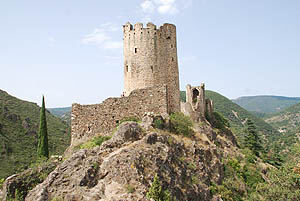


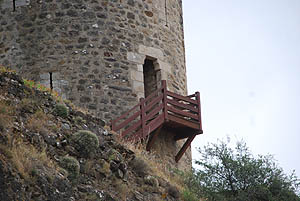
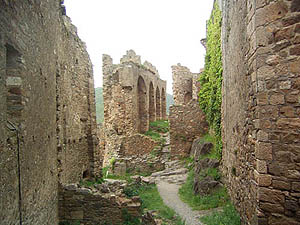


 Cabaret
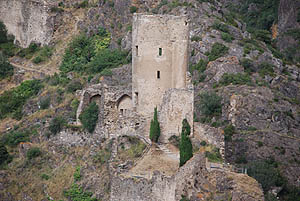
is the main citadel with a barbican defence system. It consists
of a north tower, a polygonal keep in the south and a group of residential
buildings in the centre. The whole is surrounded by ramparts with
a round walk. The crenelated wall is built with irregular material,
with large stones forming the corners and openings. Some notable
features are:
Cabaret
is the main citadel with a barbican defence system. It consists
of a north tower, a polygonal keep in the south and a group of residential
buildings in the centre. The whole is surrounded by ramparts with
a round walk. The crenelated wall is built with irregular material,
with large stones forming the corners and openings. Some notable
features are:


|
|
|
|
|
|
||||
|
|||||||||


| :::: Link to us :::: Castle and Manor Houses Resources ::: © C&MH 2010-2016 ::: contact@castlesandmanorhouses.com ::: Advertising ::: |