 |
Cathar Castles
|
   |
 |
|
|
|
|
|
||||||||||||||||||||||||||||||||||||||||||||||||||||||||||||||||||
|
|
|
|
|
|
 |
||||||||||||||||||||||||||||||||||||||||||||||||||||||||||||||||||
|
|
Château de Termes (
|
|
|||||||||||||||||||||||||||||||||||||||||||||||||||||||||||||||||||||
AddressContact James McDonald Tel from the US: 010 33 468 201142 Tel from the UK: 01 33 468 201142 Tel from France: 0468 201142 Tel other: + 33 468 201142 e-mail castlesandmanorhouses@gmail.com |
|
||||||||||||||||||||||||||||||||||||||||||||||||||||||||||||||||||||||
Google Maps |
|
||||||||||||||||||||||||||||||||||||||||||||||||||||||||||||||||||||||
|
|
|
|||||||||||||||||||||||||||||||||||||||||||||||||||||||||||||||||||||
Location
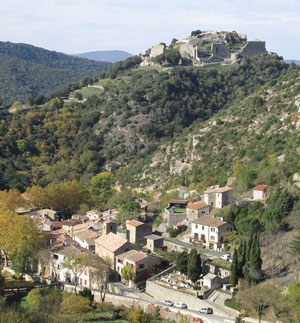
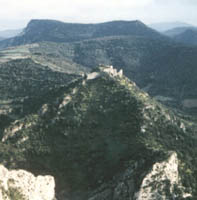
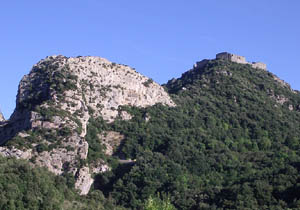
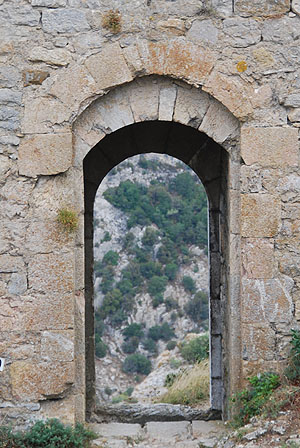
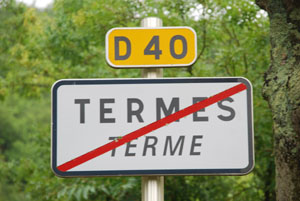
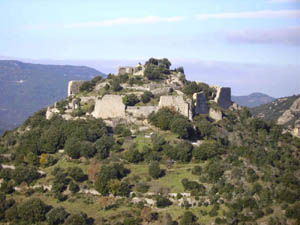
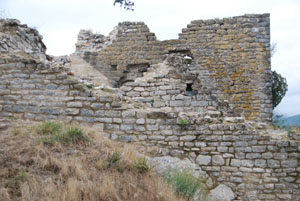
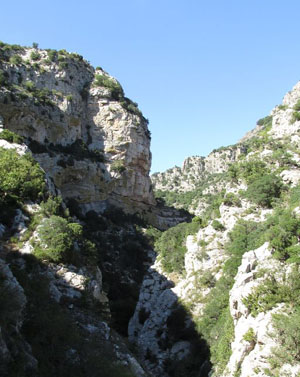
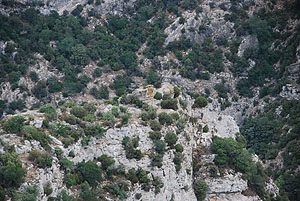
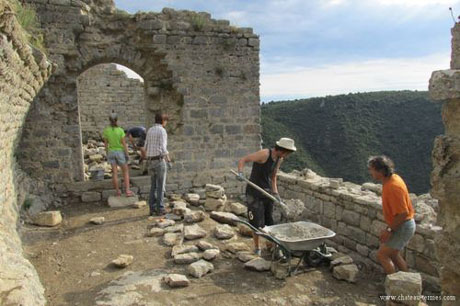
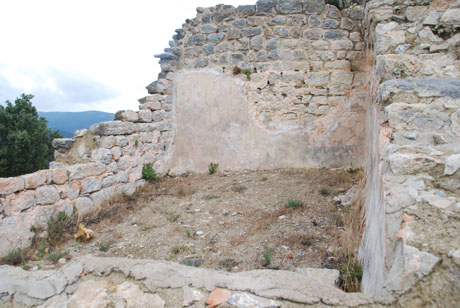
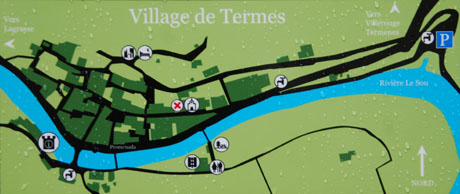
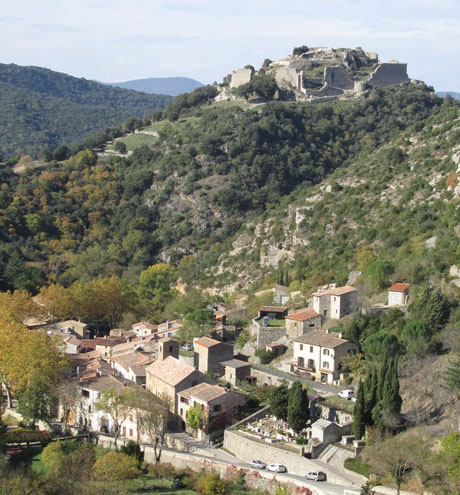
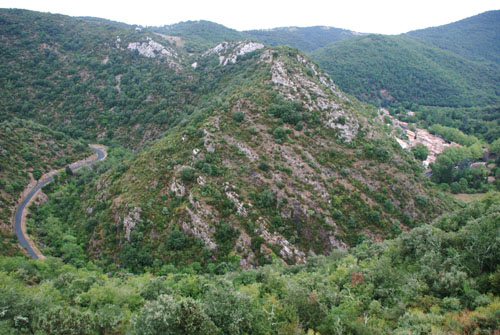
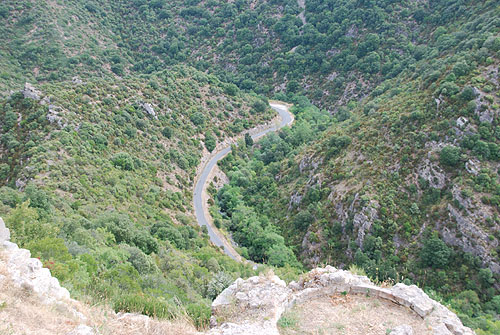
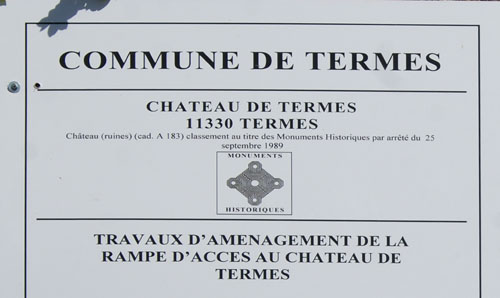
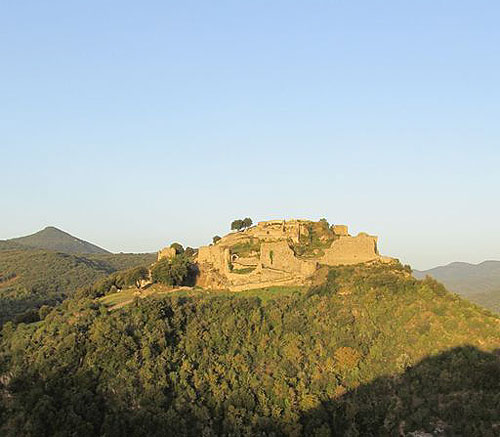
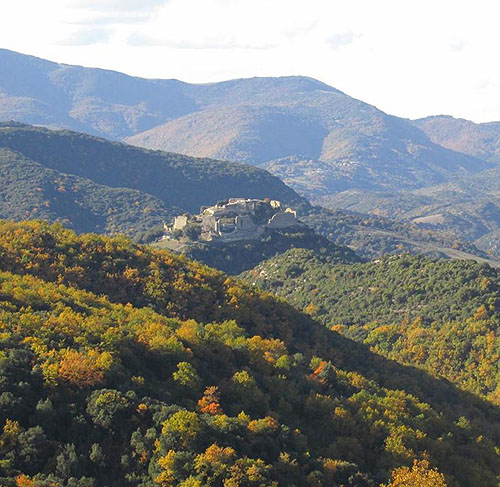
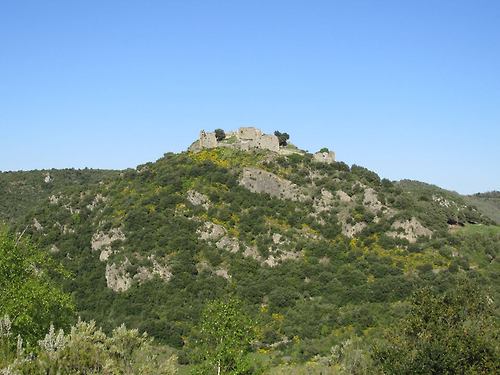
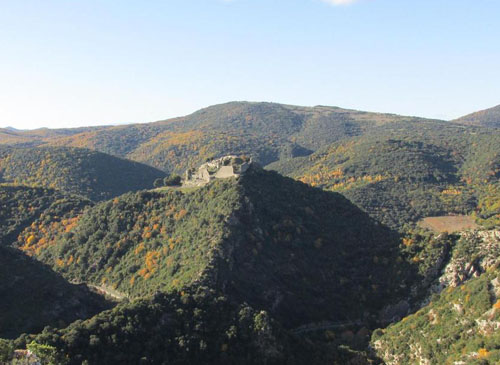
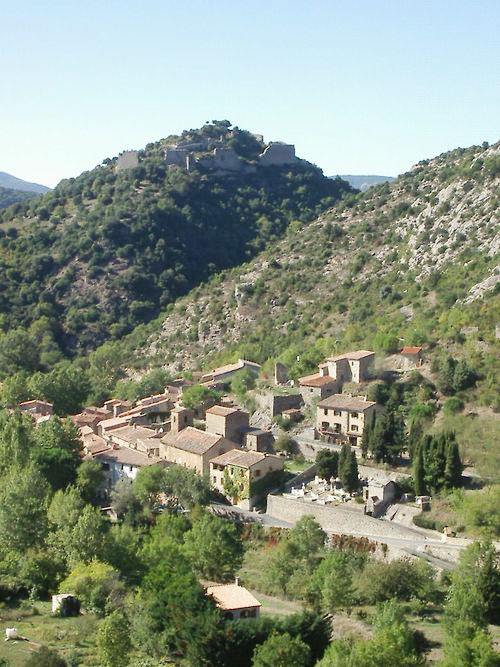
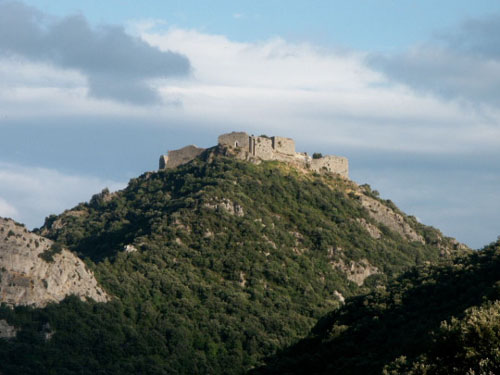
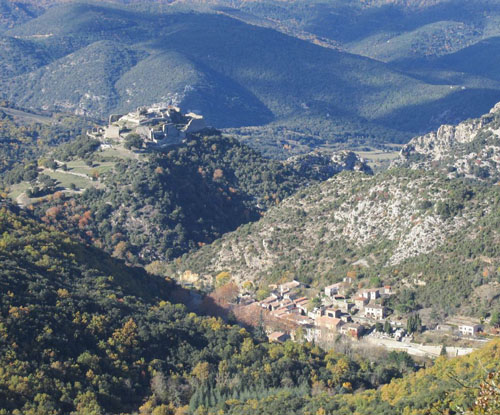
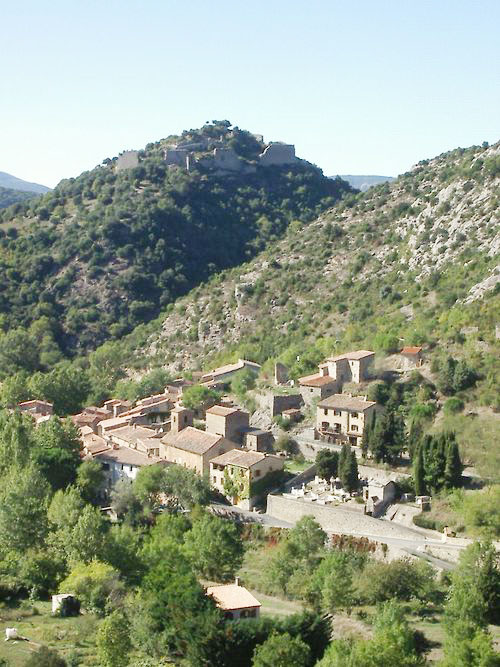
The Château de Termes is a ruined castle near the village of Termes in the Aude département of the Languedoc G.P.S. : 43° 0' 7" Nord - 2° 33' 27" Est Steps to preserve the site were taken in the 20th century. It has been classified as a monument historique since 1942. Since 1989, it has been the property of the commune of Termes. It is a 15 to 20 minutes walk from the village and open to visitors. The site offers impressive views of the Terminet Gorges.
|
|
||||||||||||||||||||||||||||||||||||||||||||||||||||||||||||||||||||||

|
|||||||||||||||||||||||||||||||||||||||||||||||||||||||||||||||||||||||
History
The incumbent seigneur at the beginning of the Wars against the Cathars of the Languedoc was an old man also called Ramon de Termes, a vassal of Ramon-Roger Trencavel (Ramon was an extremely common name among the people of the Languedoc in the Middle Ages. It is an Occitan name rendered in English and French as Raymond). There is no evidence that Raymond of Termes was himself a Cathar, though his brother certainly was. Benedict of Termes (Benoît de Termes) had been a Cathar representative at the Colloquy of Montréal in 1207, the final debate in Pamiers with Dominic Guzmán representing the Catholics. (The public failure of the future Saint Dominic and his colleagues at this debate had been a contributory factor to the calling of the Albigensian Crusade by Pope Innocent III soon afterwards). Benedict was elected Cathar Bishop of Razès in 1226 at a council held at Pieusse. The only other circumstantial evidence of a Cathar connection is that Lords of Termes were constantly squabbling with the Abbey of Lagrasse over their respective rights. On the other hand this sort of dispute was normal at this period even for the most pious Catholic rulers.
The indigenous people were disheartened by the fall of Termes and surrendered the nearby castles at Coustaussa and Le Bézu without a fight. De Montfort went on to besiege Puivert. After the château of Termes had been taken, it and another château nearby (le Termenès) were given to Alain de Roucy, one of Simon de Montfort's lieutenants. De Roucy experienced exactly the same problems as Raymond had with the voracious Abbots of Lagrasse. At his death his son ceded Termes to the Archbishop of Narbonne in 1224. It passed to the King of France (Louis VIII:) in 1228. Termes continued to be of strategic value to the French as it lay near to the border with Aragon (to which it had belonged before it was captured and annexed by France). Termes is one of the "Five Sons of Carcassonne", five Royal castles strategically placed to defend the border against Aragon. The others are Aguilar, Peyrepertuse, Queribus and Puilaurens.
Further Information
The The Song of the Cathar Wars (Chanson de la Croisade). Click on the following link to read an English translation of William of Tudelle's account, written in Occitan of The Siege of Termes from The Song of the Cathar Wars: The History of the Albigensian Crusade, translated by Janet Shirley (Aldershot: Ashgate, 1996). Historia Albigensis (The History of the Albigensian Crusade) by Pierre des Vaux-de-Cernay a contemporary chronicler in the crusader army. Click on the following link to read their English translation by W.A. and M.D. Sibly (Boydell, 1998) of sections 171 to 192 of chapter 7 of the Historia Albigensis by Pierre Des Vaux-de-Cernay. You can also buy these books. See below:
Click on the following link for recommended
Books on the Cathars Click on the following link for a full chronology of the Crusades against the Cathars of the Languedoc |
|
||||||||||||||||||||||||||||||||||||||||||||||||||||||||||||||||||||||
Architecture
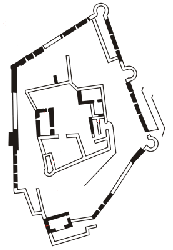
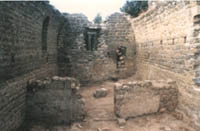
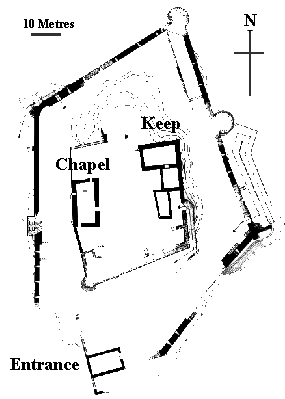
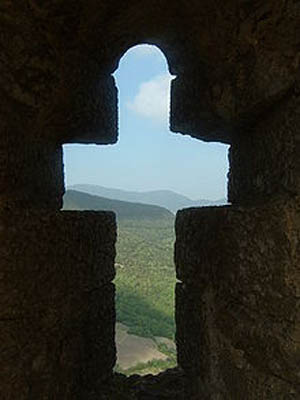
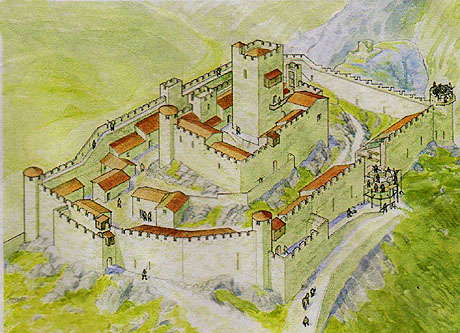
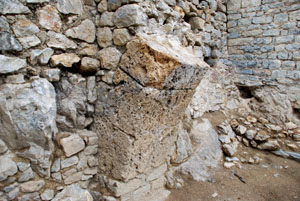
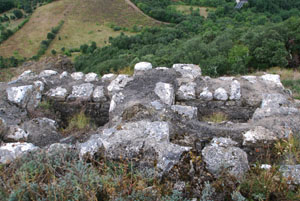
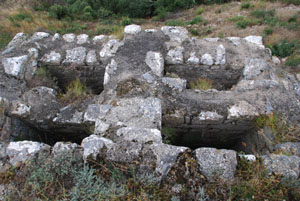
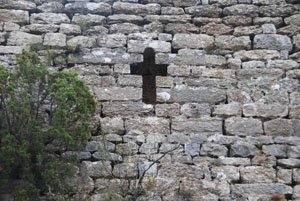
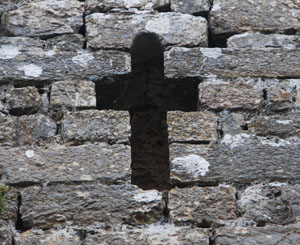
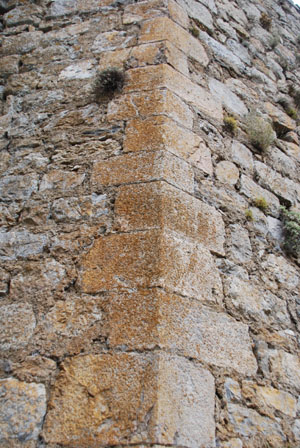
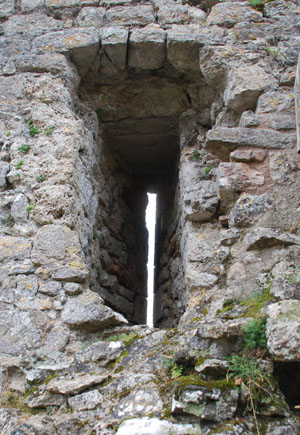
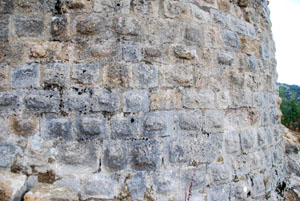
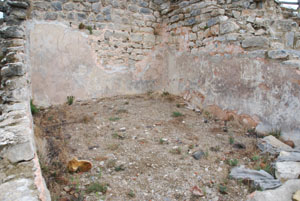
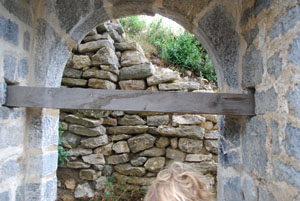
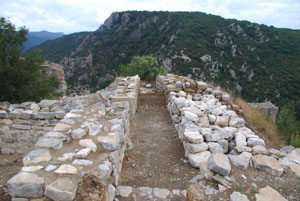
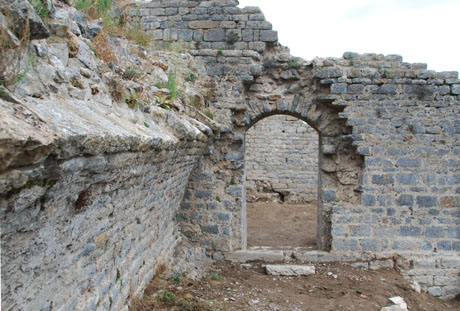
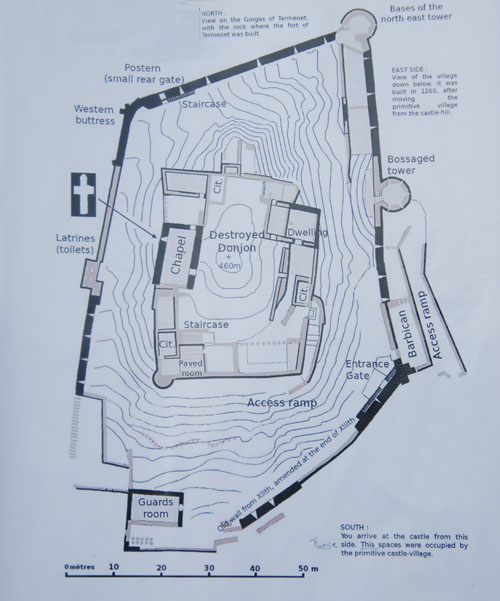
The castle has an anciente (curtain wall) protecting a donjon (keep), cistern, chapel and other buildings. Things to note:
|
|
||||||||||||||||||||||||||||||||||||||||||||||||||||||||||||||||||||||
|
|
|
||||||||||||||||||||||||||||||||||||||||||||||||||||||||||||||||||||||
Photographs |
|
||||||||||||||||||||||||||||||||||||||||||||||||||||||||||||||||||||||
|
|
|
|||||||||||||||||||||||||||||||||||||||||||||||||||||||||||||||||||||
|
|
||||||||||||||||||||||||||||||||||||||||||||||||||||||||||||||||||||||
|
|
|||||||||||||||||||||||||||||||||||||||||||||||||||||||||||||||||||||||
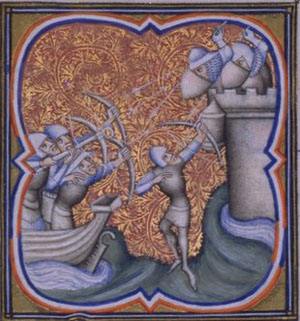
The Siege of Termes (1210)
|
|
||||||||||||||||||||||||||||||||||||||||||||||||||||||||||||||||||||||
|
|
Count Simon de Montfort laid his siege before and all round Termes, and then he heard this news. You can imagine how pleased he was with Sir William of Contres and his companions for saving the siege engines, and more pleased still at their defeat of the baron called Peter Roger - God do him no good! For I believe the count would not be so delighted to be given all the gold of Macon as he was when they told him of the great victory Sir William of Contres had won. Ah God, how well the news was announced by the noble young man Sir William sent to escort those weapons! That task too, he did well, I can truthfully say, bringing them safely all the way to the siege before Termes. |
De Montford's siege engines had to brought on horse drawn carts south from Carcassonne. They were attacked on the way by Languedoc knights led by Peter-Roger de Cabaret, but got through. The poet does not make any pretence at impartiality - he is firmly in the crusader camp. |
|||||||||||||||||||||||||||||||||||||||||||||||||||||||||||||||||||||
|
|
Here there were many barons, many tents of silk and fine pavilions, many silk tunics and rich brocades, mailshirts too and many a fine banner, many an ashen haft, ensigns and pennons, many a good knight and fine young men of noble race Germans, Bavarians, Saxons, Frisians, men from Maine, Anjou, Normandy and Brittany, Lombards and Longobards, Gascons and Provencals. The lord archbishop of Bordeaux was there and so was Sir Amanieu d'Albret and men from Langon. All those who came did their forty days' duty, so that as some arrived, others left. But Raymond, lord of Termes, counted none of them worth a button, for no one ever saw a stronger castle than his. There they kept Pentecost, Easter and Ascension and half the winter, as the song says. |
The Crusaders came mainly from France and northern Europe, but there were others - attracted by the promise of the benefits in this world and the next. |
|||||||||||||||||||||||||||||||||||||||||||||||||||||||||||||||||||||
|
|
No one ever saw so numerous a garrison as there was in that castle, men from Aragon, Catalonia and Roussillon. Many were the armed encounters and shattered saddle-bows, many the knights and strong Brabanters killed, many the ensigns and fine banners forcibly borne off into the keep against the crusaders' will. As for the mangonels and catapults, the defenders did not think them worth a button. Meat they had in plenty, both fresh meat and salt pork, water and wine to drink and an abundance of bread. If the Lord God had not dealt them a blow, as he did later when he sent them dysentery, they would never have been defeated. |
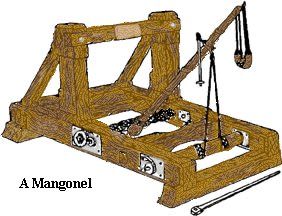
Termes was a fief of the Viscount of Carcassonne who held it on behalf of the King of Aragon. Mangonels are catapults - referred to earlier as siege engines. The poet sees the hand of God in every defender set-back. |
|||||||||||||||||||||||||||||||||||||||||||||||||||||||||||||||||||||
|
|
My lords, will you hear how Termes was taken and how Christ Jesus there displayed his mighty power? Nine months the army sat around that stronghold until its water supply dried up. They had wine for another two or three months, but I do not think anyone can live without water. Then, God and the faith help me, there was a heavy downpour of rain which caused a great flood, and this led to their defeat. |
The siege actually lasted four to seven months, not nine. What seems to have happened is that dead animals had fallen into the empty water cisterns. When the rain finally came it refilled the cisterns, but the water was infected from the dead animals. |
|||||||||||||||||||||||||||||||||||||||||||||||||||||||||||||||||||||
|
|
They put quantities of this rainwater into butts and barrels and used it to knead and cook with. So violent a dysentery seized them that the sufferers could not tell where they were. They all agreed to flee rather than die like this, unconfessed. They put the ladies of the castle up into the keep, and then when it was dark night and no one could see what was happening, they went out, taking with them no possessions, nothing, I believe, except money. |
They apparently escaped by means of an underground tunnel. |
|||||||||||||||||||||||||||||||||||||||||||||||||||||||||||||||||||||
|
|
At that point Raymond of Termes told them to wait because he was going back into the castle, and while they waited some Frenchmen met him on his way in and they captured him and took him to the count de Montfort. The others, Catalans and Aragonese, fled to escape being killed. But the count de Montfort behaved very well and took nothing from the ladies, not even the value of a penny coin or a Le Puy farthing. |
The fact that Simon behaved "very Well" on this occasion is indeed remarkable - a stark contrast to his usual behaviour. The crusaders must have been content with their other booty, which the poet mentions elsewhere: "the siege will cost many a mark and many a penny of Tours. Horses and palfreys will be won, and much wealth, much fine armour". |
|||||||||||||||||||||||||||||||||||||||||||||||||||||||||||||||||||||
|
|
When it was known throughout the land that Termes had fallen, all the strongest castles were abandoned, and Le Bezu was taken, without any need for sieges. The men of these garrisons who left the castles never supposed that the crusaders would get that far. God who is full of mercy worked a great miracle there, for he gave finer winter weather than anyone has known in summer. |
The text actually refers to Albedun which was identified as referring to Le Bézu only in recent times. Coustaussa appears to have submitted at the same time as the next stronghold to be attacked was Puivert. |
|||||||||||||||||||||||||||||||||||||||||||||||||||||||||||||||||||||
|
|
There exists another account of the siege of Termes from Historia Albigensis (The History of the Albigensian Crusade) by Pierre Des Vaux-de-Cernay a contemporary chronicler in the crusader army. Click on the following link to read an English translation by W.A. And MD Sibly (Boydell, 1998) of sections 171 to 192 of chapter 7 of the Historia Albigensis by Pierre Des Vaux-de-Cernay. |
|
|||||||||||||||||||||||||||||||||||||||||||||||||||||||||||||||||||||
The Siege of Termes (1210), according to the Historia Albigensis by Pierre Des Vaux-de-Cernay
It is likely that Pierre Des Vaux-de-Cernay travelled with the Crusader armies of Simon de Montfort, and was an eyewitness to many of the events he describes. He is not impartial. He supports the crusaders wholeheartedly (he was a member of their camp), and portrays anyone who opposed them as caricatures of wickedness. The French knights lead "our troops" and their leader Simon de Montfort is "our Count". As there are so few sources, Pierre Des Vaux-de-Cernay is one of the most important witnesses of information for the Albigensian Crusades if allowance is made for his consistent bias, credulity and naïvité. The Historia Albigensis was written between about 1212 and 1218 when Peter was a young monk at the Cistercian abbey of les Vaux-de-Cernay, where his uncle Guy was the abbot. Guy had taken part in the unsuccessful preaching mission against the Cathars in 1207. He (Guy) later played an important part in the crusade and became bishop of Carcassonne. The following portion, is from sections 171 to 192 of chapter 7, of the Historia Albigensis; (See also English Historical Review, Vol. 114, No. 459 (Nov., 1999), pp. 1287-1288). |
|
||||||||||||||||||||||||||||||||||||||||||||||||||||||||||||||||||||||
|
|
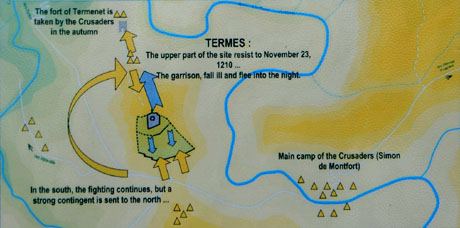
[171] Description of Termes. The castrum of Termes was in the territory of Narbonne, five leagues from Carcassonne. It was marvellously, indeed unbelievably, strong and in human estimation appeared to be quite impregnable. It was situated on the summit of a very high peak, overlooking a huge natural cliff, and surrounded on all sides by very deep and inaccessible ravines, with water flowing through them, surrounding the whole castrum. In turn the ravines were surrounded by huge crags, so difficult to climb down from that anyone wishing to approach the walls would need first to throw himself into a ravine and then as it were "crawl back towards heaven". Moreover, a stone's throw from Termes itself, there was a crag on whose summit there was a small but very strong fortified tower known as "Termenet". So situated, Termes could be approached from one side only, where the rocks were lower and less inaccessible. |
The site, in the The Corbières, can still be seen today. |
|||||||||||||||||||||||||||||||||||||||||||||||||||||||||||||||||||||
|
|
[172] The lord of this place was a knight named Raymond who as an old man had become given over to a reprobate mind; a manifest heretic who (to describe his evil nature in a few words) feared not God neither regarded man. So confident was he in the strength of his castrum that from time to time he was prepared to take up arms against the King of Aragon, the Count of Toulouse or his overlord the Viscount of Beziers. When this tyrant heard that our Count planned to besiege Termes he gathered together as many knights as he could, filled the castrum with large stores of food and whatever else he needed for its defence and prepared to withstand the siege. |
Raymond de Termes was as far as we know an ordinary nobleman of his time and location. |
|||||||||||||||||||||||||||||||||||||||||||||||||||||||||||||||||||||
|
|
[173] Siege of Termes. Arriving at Termes, our Count started the siege with a modest force and was able to occupy a small part of the castrum. The defenders, numerous and well protected, showed no fear of our modest army; they were able to come and go freely to obtain water and whatever else they needed whilst our men watched, too weak to oppose them. Whilst this and similar events were taking place small groups of French crusaders were arriving each day to join the army. Seeing them arrive, our adversaries climbed the walls and poured down abuse on our men, because the newcomers were so few and poorly armed, calling derisively: "Fly from the sight of the army, fly from the sight of the army!" Soon afterwards crusaders began to come in large groups from France and Germany, whereupon the enemy began to be afraid, stopped heaping insults on us and became less bold and confident. Meanwhile the Lord of Cabaret, the chief and most cruel enemies of the Christian religion at that time, patrolled the public roads near Termes night and day and whenever they carne across any of our men either condemned them to a shameful death or, to show their contempt for God and our side, most cruelly put out their eyes and cut off their noses and other members, and sent them back to the army. |
Notice that de Montfort is "our" Count. It is not clear whether the charge against the defenders is true or just routine propaganda (It is not mentioned in other courses). |
|||||||||||||||||||||||||||||||||||||||||||||||||||||||||||||||||||||
|
|
[174] Arrival of the Bishops of Chartres and Beauvais and many other nobles. So matters stood when a number of noble and powerful men arrived from France; Renaud, Bishop of Chartres, Philip, Bishop of Beauvais, Count Robert of Dreux and also the Count of Ponthieu. They were accompanied by a substantial force of crusaders whose arrival greatly cheered the Count of Montfort and the whole army. It was hoped that strong action would result from the arrival of these powerful men; and that they would grind down the enemies of the Christian faith with a strong hand and a stretched out arm. But He who puts down the mighty and gives grace to the humble, through some secret design known only to Himself, wished nothing great or glorious to be achieved by their hand. As far as human reasoning can determine, the just judge so acted either because they were not worthy to be the instrument for the great and worshipful God to do great and wonderful things; or because if great men were to perform any great deed it would be ascribed entirely to human power, and not Divine. So, the Heavenly Disposer thought it better to keep that victory for the humble, so that by winning through them a glorious triumph He might give glory to His own great name. Meanwhile our Count had siege-engines erected of the kind known as petraries. These bombarded the outer wall of Termes, whilst our men laboured day by day on the siege. |
Note that here, as in all other sources, the Chronicler refers to his own side as being from France. No-one in this period thought of the lands of the Viscounts of Carcassonne or the Counts of Toulouse as being part of France. Note too, that it was perfectly normal for bishops to take an active part in wars - no chronicler ever considers it worth explaining or justifying. |
|||||||||||||||||||||||||||||||||||||||||||||||||||||||||||||||||||||
|
|
[175] The Archdeacon of Paris. Present in the army was a venerable man of high honour, William the Archdeacon of Paris. Inspired by zeal for the Christian faith, he had dedicated himself totally and devotedly to the service of Christ. He preached every day, organised collections to contribute to the cost of maintaining the siege-engines and carried out other similar and necessary duties with great enthusiasm. He frequently led large groups of crusaders to a wood and had them gather large quantities of timber for the engines. One day our men were trying to erect an engine near the walls but were prevented by a deep ravine. This man of steadfast purpose and incomparable zeal, in the spirit of wisdom and courage found the solution needed to overcome this obstacle; he led the crusaders to the wood, instructed them to take back a huge quantity of timber, and had them fill the ravine with wood, earth and stones thus providing a level place for our men to erect the engine. Since I cannot describe in full all the planning, care and effort the Archdeacon devoted to the siege, or the burden of work he undertook, suffice it to say that to him more than anyone, save God alone, must be ascribed the unceasing and dedicated enthusiasm brought to the siege and the victorious outcome. He was a man outstanding in piety, wise in counsel, and of a courageous heart. Whilst the siege was in progress God granted him such grace that he was found to be most expert in all things needed for its success; he taught the smiths, he instructed the carpenters, he excelled every craftsman in showing what had to be done to further the siege. As already described, he arranged for the ravines to be filled and again when it was necessary, had the high bills made level with the deep valleys. |
Clergymen were the nearest to architects and engineers the Medieval Christian educational system produced. Many became weapons experts - another bishop was called in specially for this reason at the siege of Montségur. |
|||||||||||||||||||||||||||||||||||||||||||||||||||||||||||||||||||||
|
|
[176] Attack on the outer bourg. So the siege-engines were set up close to the castrum and employed for some days in hurling missiles against the wall. As soon as our men saw that the outer wall had been weakened by the continuous bombardment of stones, they armed themselves with the intention of taking the outer bourg by a frontal attack. Our opponents observed this and as our men drew near to the wall set fire to the outer bourg and withdrew to a higher bourg. However, as soon as our men entered the outer bourg the enemy came out to meet them and quickly drove them out in flight. |
|
|||||||||||||||||||||||||||||||||||||||||||||||||||||||||||||||||||||
|
|
[177] Such was the state of affairs when our men realised that their attempts to capture the castrum were being severely impeded by the tower of Termenet which I described above, and which was defended by a body of knights, and they began to consider how they might capture it. They therefore set guards at the base of the tower (which, as I mentioned, was built on the summit of a high crag), so as to prevent the men in the tower having access to Termes itself or those in the castrum providing help to the tower if need arose. After a few days our men succeeded, with great difficulty and at great risk, in erecting a siege-engine of the type known as a mangonel in an inaccessible place between Termes and the tower. The defenders in their turn erected a mangonel and bombarded our engine with huge stones, but could not knock it down. Thus our mangonel was able to continue bombarding the tower. The defenders now realised that they were besieged and could expect no help from their comrades in Termes, and one night in fear for their safety they sought protection in flight, leaving the tower empty. The guard at the base of the tower was being mounted by the sergeants of the Bishop of Chartres; they occupied the tower as soon as they saw what had happened, and erected the Bishop's standard on the roof. |
It was normal for defenders to build their own war machinery, often targeting the attackers' siege engines. Indeed attackers always needed to guard against a sortie designed specifically to destroy their machinery (Raymond of Cabaret had done exactly that to Simon's mangonels at Carcassonne) |
|||||||||||||||||||||||||||||||||||||||||||||||||||||||||||||||||||||
|
|
[178] Whilst this was going on, our petraries on another side of the castrum kept up a continuous bombardment of the walls. When our adversaries - who were admittedly courageous and astute - saw that the engines were weakening any part of the walls, they at once built a barrier of wood and stones inside at the weak point. The outcome was that whenever our men were able to force their way inside the walls at any place, the barrier built by the enemy prevented there from going any further. As space does not permit one to describe every detail of the siege, 'I shall simply say that every time the defenders lost any part of their wall they built another wall inside in the manner I have described. |
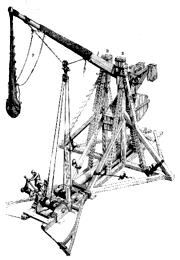
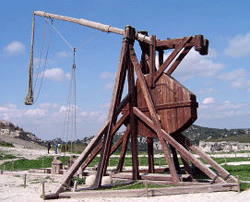
Petrary is the generic name for stone throwing machines of war. The term covers catapults, trebuchets and mangonels. Catapults and mangonels are both mentioned explicitly at Termes, but not trebuchets. |
|||||||||||||||||||||||||||||||||||||||||||||||||||||||||||||||||||||
|
|
[179] Meanwhile our men erected a mangonel in an inaccessible place at the foot of a crag near the wall, which inflicted no slight damage on our enemies when it was put to use. Our Count sent a force of three hundred sergeants and five knights to defend the mangonel; there was great concern for its safety, because our men knew that our opponents would spare no effort to destroy an engine that was causing them so much trouble, and also because the difficulty of access to the mangonel would make it impossible for the main army to help those guarding it in a emergency. |
|
|||||||||||||||||||||||||||||||||||||||||||||||||||||||||||||||||||||
|
|
One day a force of enemy soldiers, up to eighty in number, protected by shields, rushed out to destroy the mangonel, followed by a huge number of other men carrying wood, fire and other materials for setting light to the mangonel. When they saw the enemy coming the three hundred sergeants guarding the mangonel were seized with panic and fled, leaving only the five knights to maintain the defence. What more? When the enemy drew near all the knights fled save one, William of Ecureuil. This knight, seeing the enemy approaching, began with great difficulty to climb over the crag to meet them; they made a concerted rush against him, and he defended himself vigorously. They saw that they could not capture him, and instead thrust him with their spears onto the mangonel, and threw dry wood and fire after him. This courageous man at once rose up and dispersed the fire, so that the mangonel was unharmed. Once again he started to climb up to face the enemy; once again they thrust him back and threw fire on him. Again he rose up and went for the enemy; four times in all they hurled him onto the mangonel. Finally our men realised that since no one from our side could reach our knight to help him, he would be unable to escape; they therefore went to another part of the wall and made as if to mount an attack, whereupon the enemy soldiers harassing William retired into the castrum. William, albeit exhausted, escaped alive. His incomparable courage had ensured that the mangonel was unharmed. |
It is difficult to work out what the writer is describing here - it is not really plausible that a single knight could frustrate the attempts of some eighty armed men to destroy a mangonel. |
|||||||||||||||||||||||||||||||||||||||||||||||||||||||||||||||||||||
|
|
[180] At this time the noble Count of Montfort was beset by extreme poverty, to the extent that he was very often even short of bread, and had nothing to eat. Frequently - I have it on sure authority - when a meal-time was at hand he would deliberately absent himself, ashamed to return to his tent, since it was the time to eat and he did not even have bread. The Venerable Archdeacon William organised fraternities and made collections, as I mentioned above. Everything he collected he spent conscientiously on the siege-engines and whatever else was needed to further the siege: truly an admirable tax-gatherer, a virtuous plunderer? |
It is plausible that Simon ran out of money - he had only small estates in France and none in England (his title of Earl of Leicester was an empty one). He was certainly an expert plunderer, but there is only a finite amount to plunder in any given area. |
|||||||||||||||||||||||||||||||||||||||||||||||||||||||||||||||||||||
|
|
[181] So matters stood when our opponents ran out of water, for our soldiers had cut off the approaches to the castrum and they could not get out to draw water. Lack of water produced lack of courage and of the will to resist. What more? They started to parley with us, and sought to negotiate peace on these terms: Raymond, the lord of Termes, promised to hand it over to the Count provided the Count allowed him to retain all his other possessions; also the Count was to return Termes to him after Easter. |
All standard siege behaviour |
|||||||||||||||||||||||||||||||||||||||||||||||||||||||||||||||||||||
|
|
Whilst discussions on these proposals were going on, the Bishops of Chartres and Beauvais, Count Robert of Dreux and the Count of Ponthieu proposed to leave the army. The Count begged them to stay a little longer to carry on the siege, and everyone else added their pleas; but as they could not be diverted from their purpose, the noble Countess of Montfort threw herself at their feet and begged them passionately not to turn their backs on the Lord's business in the hour of such great need, and to give help at this time of crisis to the Count of Jesus Christ, who every day was exposing himself to mortal danger on behalf of the Catholic Church. The Bishop of Beauvais, Count Robert and the Count of Ponthieu were unmoved by the Countess's prayers, but said that they would leave the next morning and were quite against staying even for one more day. The Bishop of Chartres, however, promised to remain with the Count for a short time longer. |
|
|||||||||||||||||||||||||||||||||||||||||||||||||||||||||||||||||||||
|
|
[182] The Count accepts proposals for a truce. The Count realised that with the departure of these three leaders he would be left virtually alone, and was driven by plain necessity, however unwillingly, to consent to the terms for an agreement offered by our adversaries. What else is there to say? Talks were reopened with the enemy and the agreement was confirmed. The Count at once instructed Raymond to leave his castrum and surrender it; the latter refused to leave that day, but gave a firm undertaking to hand the place over early next morning. That Divine justice willed and foresaw this delay is most clearly demonstrated by subsequent events; for God, the most just judge, did not wish that the man who had so grossly wronged His Holy Church (and was ready to do still worse, if he could) should escape immune and unpunished after a life so dedicated to cruelty, since - to say nothing of his other crimes - thirty years and more had now passed (as I have heard from trustworthy witnesses) during which the Holy sacraments were never celebrated in the church at Termes. |
The Medieval clerical mind only rarely failed to discern the hand of God in events - however they unfolded. |
|||||||||||||||||||||||||||||||||||||||||||||||||||||||||||||||||||||
|
|
[183] The following night, there was a sudden intense rainstorm, as if the sky had broken apart and the floodgates of heaven had opened. So great was the downpour that our enemies, who had long suffered from an extreme shortage of water, and had for this reason proposed to surrender to us, now found themselves with an abundant supply. Our harp is turned to mourning, the grief of our enemies is changed to joy! They at once became arrogant and recovered their courage and the will to resist. Their cruelty, their eagerness to oppose us, increased, the more so because they dared to think the storm was a sign that some Divine aid had come to them in their hour of need. What a vain and unjust presumption, to boast of help from Him whose worship they despised, whose faith they had rejected! They said indeed that God did not wish them to surrender; all this, they asserted, had been done for their benefit - but in truth Divine justice had arranged it for their downfall. |
As in all battles in Medieval Christendom, both sides were adept at discerning the Hand of God - and both disparaged the absurd claims of the other side. |
|||||||||||||||||||||||||||||||||||||||||||||||||||||||||||||||||||||
|
|
[184] Departure of the nobles. So matters stood when the Bishop of Beauvais, Count Robert and the Count of Ponthieu left the army and returned home, leaving Christ's business unfinished and indeed in a most critical and dangerous position. If I may be allowed to record what they allowed themselves to do they left without completing their forty days' service. Indeed the papal legates, aware that most of the crusaders were somewhat lukewarm in their enthusiasm for the campaign and perpetually anxious to go home, had laid it down that the indulgence promised to the crusaders by the Pope would not be granted to anyone who failed to complete at least one full period of forty days in the service of Jesus Christ. |
The 40 days is called "quarantine". Crusaders were required by feudal law to serve for only the 40 days of their quarantine. This was enough to earn them full remission of sins passed and future and win a guaranteed place in heaven. Only those driven by zeal, bloodlust or greed for booty stayed longer than they had to. It is notable that the chronicler lets slip the fact that the crusaders' enthusiasm was lukewarm. Despite Peter's propaganda, few nobles apart from churchmen enjoyed despoiling their fellow nobles. |
|||||||||||||||||||||||||||||||||||||||||||||||||||||||||||||||||||||
|
|
[185] At first light the Count sent to Raymond, the lord of the castrum, ordering him to hand it over as he had promised on the previous day. Raymond, however, who now had water in plenty instead of the shortage which had produced his willingness to surrender and who also saw that almost the whole strength of the army was leaving, changed his mind and wormed his way out of his undertaking. However, two knights in Termes who had on the previous day given firm promises of surrender to the Count's Marshall did come out and give themselves up to the Count. When the Marshal, who had been instructed by the Count to go in person to parley with Raymond, returned and reported what the latter had said, the Bishop of Chartres (who wanted to leave next day) urged that the Marshal should be sent again to Raymond and offer a truce on whatever terms were acceptable to him, so long as he agreed to hand over the castrum. In the hope that it would help in persuading Raymond to agree, the Bishop further advised that the Marshal should take with him the Bishop of Carcassonne, who was with the army, because he was a native of the area and was known to the murderous lord of Termes; moreover the bishop's mother - a heretic of the worst sort - was in the castrum as was his brother William of Roquefort whom I have already mentioned. William was a most cruel man, who strove to excel others in hostility to the Church. The Bishop and the Marshal again approached Raymond. Arguments were succeeded by prayers, prayers by threats, as they strove energetically to persuade the tyrant to accept their advice and surrender himself to our Count, and indeed to God, on the basis I described above. Previously the Marshal had found Raymond obstinate and determined in his hostility; now the Bishop and the Marshal found him even more obstinate. He refused even to allow the Bishop to speak privately with his brother. With nothing achieved, the two returned to the Count. As yet, our people did not clearly see that (as I have already said) Divine goodness had ordained matters in this way, the better to forward the interests of His Church. |
|
|||||||||||||||||||||||||||||||||||||||||||||||||||||||||||||||||||||
|
|
[186] Departure of the Bishop of Chartres. At first light next day the Bishop of Chartres left. The Count left the army and went with him, intending to follow him for a short distance. When he was some little way from the army, a large armed band of our enemies came out of Termes intending to demolish one of our mangonels. The shouts of our army induced the Count to return. He reached the enemy soldiers who were pulling down the mangonel and, quite alone, compelled them willy-nilly to return to the castrum. He pursued them with great courage, and put them to flight not without peril to his own life - the act of a courageous leader and a valiant man. |
Another single handed victory! |
|||||||||||||||||||||||||||||||||||||||||||||||||||||||||||||||||||||
|
|
[187] The Count saw that with the departure of these nobles, that is the Bishops and the Counts, he was virtually alone and almost deserted. He was now extremely anxious and concerned, and did not know what to do. He did not want to abandon the siege, but could not stay where he was any longer; he had many well-armed opponents, but few allies of whom most were ill-equipped, since, as I have said, the whole strength of the army had gone with the Bishops and the Counts. Besides, Termes was still very strong and it was felt that it could be taken only by a strong and numerous force. Moreover, winter was approaching and was usually very severe in that region; Termes was situated in a mountainous area (as I have already described), and consequently, what with heavy rainfall, violent winds and an abundance of snow, it was an unusually cold and almost uninhabitable place. |
|
|||||||||||||||||||||||||||||||||||||||||||||||||||||||||||||||||||||
|
|
[188] Whilst the Count was thus troubled and distressed and at a loss what to do, one day a contingent of crusaders on foot came on the scene from Lorraine. The Count was delighted by their arrival and strengthened the siege. With the industrious help of Archdeacon William, our men regained their spirits and began to work hard on everything concerned with the siege. At once the siege-engines, which had previously had little success, were brought nearer the walls. Our men worked on them continuously and did no little damage to the walls. In some strange way, by the incomprehensible dispensation of God, a marvellous thing happened; the engines, which had achieved little or nothing whilst the nobles and bishops were with the army, began - now that they had gone - to fire with an accuracy that suggested the Lord himself was aiming each stone. In truth, this was the Lord's doing and was marvellous in our eyes. |
|
|||||||||||||||||||||||||||||||||||||||||||||||||||||||||||||||||||||
|
|
[189] After our men had spent some time working on the machines and had succeeded in weakening a large section of the keep, one day, the feast of St Cecilia, the Count had a trench carefully dug out and covered with hurdles, which would allow sappers to approach the wall and dig under it. The Count spent the whole day on the preparation of the trench without breaking off to eat, and as night approached - it was the eve of the feast of St Clement - he returned to his tent. The enemy in Termes, with the intervention of Divine clemency and the help of the Blessed Clement, were seized with fear to the point of utter desperation. They at once ran out, seeking to escape. The men of our army saw what was happening, raised a great shout, and began to run hither and thither in order to capture the fugitives. I need delay no longer - many escaped, some were captured alive, even more were slain. A crusader from Chartres, a poor man and a commoner, had joined his comrades in pursuit of the fleeing enemy. By a Divine judgement, he captured Raymond, the lord of Termes, who had found a hiding place, and handed him over to the Count. The Count treated his capture as an unexpected gift; he did not kill him but had him confined to a dungeon in the keep at Carcassonne where for many years he paid a wretched penalty worthy of his crimes. |
This account differs from that in the Song of the Cathar War. We are not informed what Raymond's crimes were - apart from defending his home against foreign invaders. |
|||||||||||||||||||||||||||||||||||||||||||||||||||||||||||||||||||||
|
|
[190] A miracle. There was one event at the siege of Termes which I must not pass over. One day the Count arranged for a small siege-engine, commonly known as a `cat', to be brought up to help in undermining the wall. The Count was standing near the engine and speaking with a knight. As a gesture of familiarity he placed his arm on the knight's shoulder, when a huge stone, thrown down from the enemy's mangonel and falling from a height with great force, struck the knight on the head. Through God's wonderful power the Count, though he had been embracing the knight, escaped unharmed. The knight received a mortal blow and died. |
A cat was an engine designed to claw away at the mortar between the stones in a castle wall. God's wonderful power seems to have been only temporarily available to Simon as he was later killed when he was hit on the head by another huge stone from another mangonel while standing by another cat (at Toulouse). |
|||||||||||||||||||||||||||||||||||||||||||||||||||||||||||||||||||||
|
|
[191] Another matter worthy of note. Another time, on a Sunday, the Count was in his tent celebrating Mass. An incident occurred which demonstrated God's provident mercy. The Count was standing to hear the Mass, and by Divine intervention a sergeant was standing right behind him. Suddenly a bolt from the enemy ballista struck the sergeant and killed him. No one should doubt that this was the result of Divine goodness; clearly in arranging that the sergeant should stand behind the Count and take the force of the missile, God's intention was to preserve the vigorous athlete of His Holy Church. |
|
|||||||||||||||||||||||||||||||||||||||||||||||||||||||||||||||||||||
|
|
[192] After the capture of Termes, on the eve of the feast of St Clement, and its occupation by our troops, the Count led his forces to a castrum named Coustaussa. Finding it deserted he went on to another castrum named Puivert, which surrendered within three days. |
He does not mention Le Bézu which is presumed to have surrendered without a fight. |
|||||||||||||||||||||||||||||||||||||||||||||||||||||||||||||||||||||
|
|
|
|
|||||||||||||||||||||||||||||||||||||||||||||||||||||||||||||||||||||
|
|
For another contemporary account see the The Song of the Cathar Wars (Chanson de la Croisade). Click on the following link to read an English translation of William of Tudelle's account, written in Occitan of The Siege of Termes from The Song of the Cathar Wars: The History of the Albigensian Crusade, translated by Janet Shirley (Aldershot: Ashgate, 1996).
|
|
|||||||||||||||||||||||||||||||||||||||||||||||||||||||||||||||||||||
|
|
|
|
|||||||||||||||||||||||||||||||||||||||||||||||||||||||||||||||||||||
|
|
|
|
|||||||||||||||||||||||||||||||||||||||||||||||||||||||||||||||||||||




 He
was imprisoned at
He
was imprisoned at 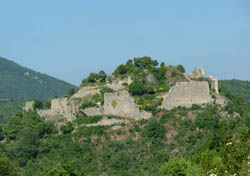












|
|
|
|
|
|
||||
|
|||||||||


| :::: Link to us :::: Castle and Manor Houses Resources ::: © C&MH 2010-2016 ::: contact@castlesandmanorhouses.com ::: Advertising ::: |